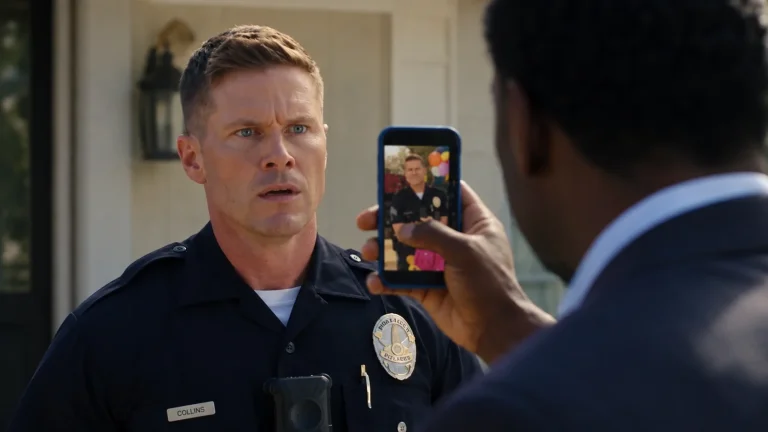
I called the police rather than opening the door.
The figure left before the responding officers arrived.
The video did not show a clear face.
It did show a silver service van parked beyond the corner.
The van disappeared before anyone could read the plate.
The responding officer had documented possible attempted unlawful entry.
He had advised us to preserve the footage and check the locks.
The next morning, I found scratches beside the study’s exterior-facing window.
The window was above the kitchen roof and difficult to reach.
I had photographed the marks.
I had not told Isaiah about them.
There was already enough for a twelve-year-old boy to worry about.
My work had recently attracted attention I did not want near my family.
I had been assigned a complicated civil case involving a private security contractor.
The company had provided electronic access systems to several public buildings.
Its former employees alleged that executives had concealed defective security reports and punished workers who raised concerns.
The case was moving through ordinary legal proceedings.
I had issued no final ruling about liability.
I had, however, ordered the parties to preserve specific records.
Some of those records concerned access logs and unusual changes to employee credentials.
A confidential submission was due the following week.
The materials were handled through court procedures, not through my home study.
That distinction mattered.
The study contained my personal notes and a duplicate copy of a publicly filed scheduling order.
It did not contain a secret verdict or a suitcase of evidence.
Anyone trying to steal from the room might have been acting on a false assumption.
Still, the attempt could have been intended to frighten me.
I had reported the security concern through the proper channels.
I had also notified the court’s security office.
Neither Renee nor I had expected someone to exploit Isaiah’s birthday party.
When Harris asked whether the attempted entry might relate to my work, I answered carefully.
I told her it was one possibility.
I said I could not establish a connection from the evidence available.
She appreciated the distinction.
Coleman did not.
From near the gate, he said I was trying to turn a routine call into a conspiracy.
Harris told him he had already been directed not to interfere.
Then she asked whether he had entered the property before or after receiving confirmation from dispatch.
He said he could not remember the exact timing.
Foster said he remembered.