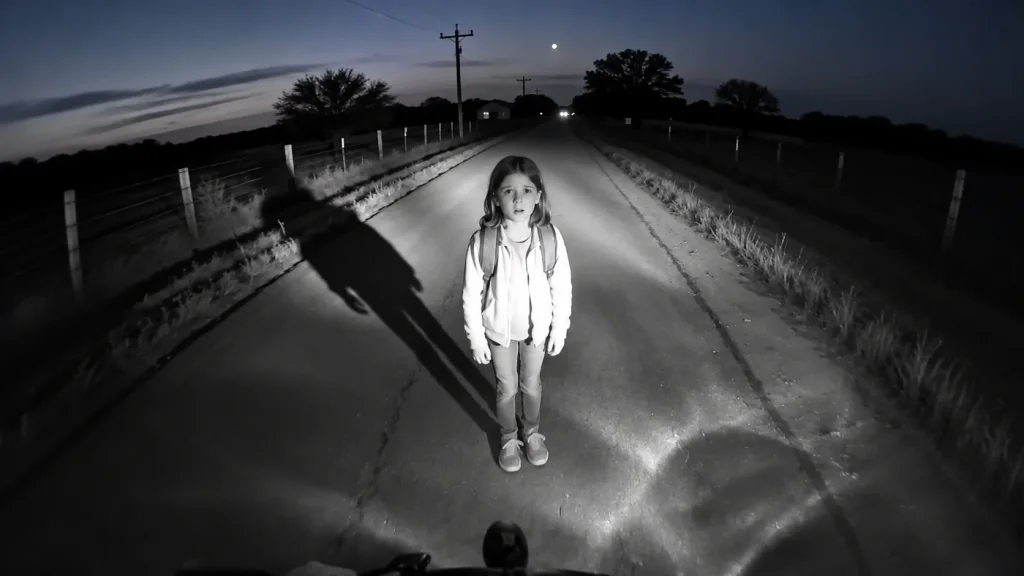
Daniel kept Emily behind the kitchen doorway while the man upstairs warned him not to move.
A second voice came through the old baby monitor on the counter.
It was Emily’s mother, Laura, whispering that the man was holding her brother Nathan in the upstairs room.
Daniel realized the warning was meant to protect Emily from seeing what the intruder had prepared, not to keep her from the truth.
Daniel wrote down the exact sequence rather than trusting the story to memory.
He had arrived at eight after finding a child alone.
The front door had been open, and the scream had come only after he announced himself.
Emily listened from a safe distance when adults spoke.
She understood more than they expected, but she could not understand why a stranger had treated her home like a place he owned.
“We are going to separate what we know from what we suspect,” Daniel told Laura.
“That is how we keep somebody from turning your fear against you.” She nodded, although her hands remained tightly clasped.
Laura thought about the difference between being frightened and being powerless.
She had been frightened since the first threatening message arrived.
She was no longer willing to let that fear determine every choice.
Daniel wrote down the exact sequence rather than trusting the story to memory.
He had arrived at eight after finding a child alone.
The front door had been open, and the scream had come only after he announced himself.
CHAPTER 2: THE FALSE NAME
The stranger called himself Paul Mercer, a county utility inspector, but Daniel noticed that the work badge was printed on ordinary paper.
He demanded that Daniel leave his radio outside and bring the girl upstairs.
Daniel refused and quietly moved Emily toward the porch.
The man knew details about the school pickup route that no utility worker should know.
Laura kept returning to one detail from the afternoon.
Someone had known that Emily would be waiting at school.
That knowledge troubled her more than the threats shouted inside the house.
The evidence was not a single miraculous clue.
It was a collection of small facts that could be checked against one another.
Daniel knew that a believable account needed times, locations, and people willing to stand behind their statements.
Nathan examined the problem from the perspective of someone who had spent years helping his sister maintain the property.











