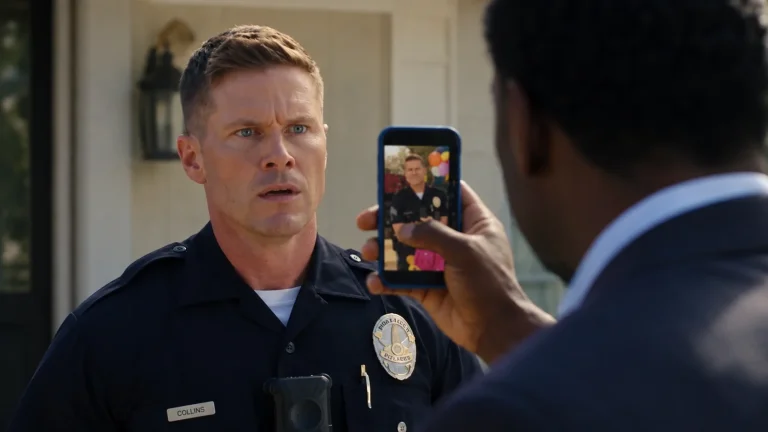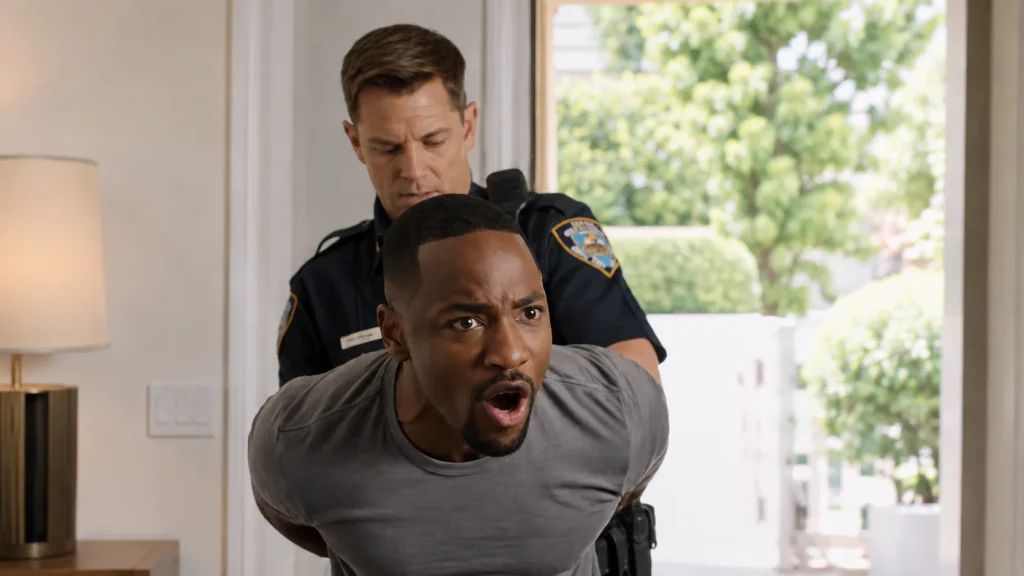
The first thing Ethan Brooks noticed was the silence after the officer snapped the handcuffs shut.
The second was the small red light blinking beneath the smoke detector in his hallway.
Officer Grant Mercer had not noticed the light, or the camera hidden inside the ordinary brass doorbell, or the second camera above the bookshelf facing the living room.
Mercer was too busy telling Ethan that people who respected the police had nothing to hide.
Ethan was thirty-nine years old, a civil rights attorney, and the owner of the modest two-story house on Willow Bend Drive in the California city of Fairhaven.
He had spent the previous nine months documenting a pattern of unlawful searches, retaliatory arrests, and missing body-camera footage involving Fairhaven police officers.
He had never imagined that the next incident in his investigation would happen in his own living room.
Mercer tightened his grip on Ethan’s arm and steered him toward the open front door.
Ethan kept his voice steady despite the pain in his shoulder.
“I am not resisting you, Officer Mercer.”
“Then stop talking.”
“I want the reason for my arrest recorded accurately.”
Mercer laughed without looking back.
“You can explain yourself to the judge.”
On the porch, a neighbor stood beside her recycling bin with a phone in her hand.
Her name was Mrs. Alvarez, and she had lived across the street for seventeen years.
“Ethan, are you all right?” she called.
“Please record what you can see from your property,” Ethan answered.
Mercer turned so sharply that Ethan nearly lost his balance.
“Put that phone away, ma’am.”
Mrs. Alvarez did not move.
“I’m standing in my own driveway.”
“This is police business.”
“Then you shouldn’t mind witnesses.”
For one brief moment, Mercer looked uncertain.
A second patrol car pulled up behind his cruiser, and a younger officer stepped out.
The young officer’s nameplate read PARK.
He looked from Ethan’s handcuffs to the open front door and then to Mercer’s face.
“What happened here?” Park asked.
“Disorderly subject who refused to cooperate with a lawful investigation,” Mercer said.
Park glanced at the quiet residential street.
“What was the original call?”
“Suspicious activity at this address.”
“Did dispatch identify a complainant?”
Mercer’s jaw tightened.
“I’ll explain it at the station.”
Ethan memorized that exchange.
He had learned that the first version of a police account often mattered more than the polished version written hours later.
Mercer pushed him into the back of the cruiser, and the door closed with a heavy mechanical click.
Through the window, Ethan watched Park remain on the porch while Mrs. Alvarez continued recording.
Park appeared to be speaking into his radio.