The house had always been quiet, but I had never noticed how much of that quiet Connor filled.
He hummed while he washed dishes.
He tapped the edge of his coffee mug when he was thinking.
He asked whether I wanted the last piece of bread even when he knew I would refuse.
I had called those habits boring because they never demanded my attention.
Now they were the details I missed most.
On Sunday morning, Connor replied.
He thanked me for the message and said Sophie had a difficult night.
He did not mention Blake or the apology.
I wrote that I hoped she felt better.
Then I deleted three different questions about when he would return.
I spent the day cleaning a house that was already clean.
I washed the sheets, emptied the refrigerator, and sorted the pile of mail Connor usually handled.
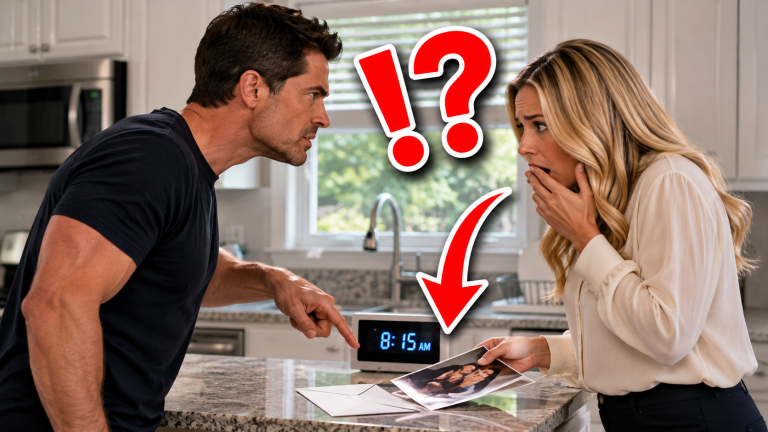
Inside the pile was a notice from our bank about an appointment he had made to discuss a separate account.
The appointment had been scheduled two weeks earlier.
I stared at the date.
Connor had been preparing to leave while I was congratulating myself on finally having freedom.
I sat down with the letter and tried to remember the last time I had asked him how he was feeling.
I could remember dozens of times I had told him what was wrong with him.
I could not remember a single recent occasion when I had listened to an answer.
The realization was painful because it was specific.
It did not allow me to hide behind a vague claim that we had grown apart.
I had helped create the distance, and I had used his willingness to bridge it as proof that nothing serious was happening.
Monday morning arrived with a message from my manager asking whether I could attend a client presentation.
I worked in marketing for a regional home services company, and the presentation was important enough that I had spent two weeks preparing it.
I stared at the slides without understanding a word.
My colleague Tessa noticed immediately.
She followed me into the break room and asked whether I was sick.
I told her my husband had moved out.
She offered sympathy and then asked whether I wanted to talk about it.
I surprised myself by telling her the truth.
I said I had been seeing another man and had assumed Connor would always stay.
Tessa leaned against the counter with her coffee untouched.
“Does he know?” she asked.
“He knows enough.”
“And the other man?”
“I ended it.”
She looked at me for a long moment.
“That doesn’t erase what happened.”
“I know.”
It was the first time I said those words without immediately offering an excuse.
Tessa suggested I speak to a counselor, not because a counselor could make Connor forgive me, but because I seemed unable to tolerate being alone with my own decisions.