I read it three times.
The language was polished, but the implication felt unmistakable.
Someone knew about my affair and wanted me to worry about exposure.
I forwarded the letter to Rebecca and Miriam without replying.
Rebecca called within an hour.
She told me not to negotiate directly with anyone connected to the disputed records.
She also reminded me that my affair was already part of the history Connor and I were addressing.
“A threat loses some power when you’re no longer hiding the truth from the people who need to know it,” she said.
I thought about the months I had spent guarding my phone.
I had lived in fear of being discovered while pretending that secrecy gave me freedom.
Now the secret was known, and I was still alive.
My marriage might be ending, but I no longer had to shape every sentence around a lie.
The next day, Miriam confirmed that she had received a similar letter.
She said her office would handle further communication about the disputed acknowledgment.
Then she told me something that changed the direction of the inquiry.
An old employee of Richard’s company had come forward after hearing that Evelyn Marsh had spoken to an attorney.
The employee, a former administrative assistant named Teresa Nolan, remembered being asked to retrieve Connor’s personnel file during the same week the acknowledgment was dated.
She also remembered a private meeting between Richard and an outside lawyer.
Teresa had kept a calendar from that year because it contained notes about a workplace complaint she later filed.
The calendar placed Richard in the office on the day Evelyn claimed he brought her the document.
It did not establish what Richard said or why he wanted the file.
It did provide another piece of the timeline.
Miriam said Teresa was willing to give a sworn statement.
I asked whether Connor knew.
“He does,” she answered.
“He’s relieved, but he’s trying not to get ahead of the evidence.”
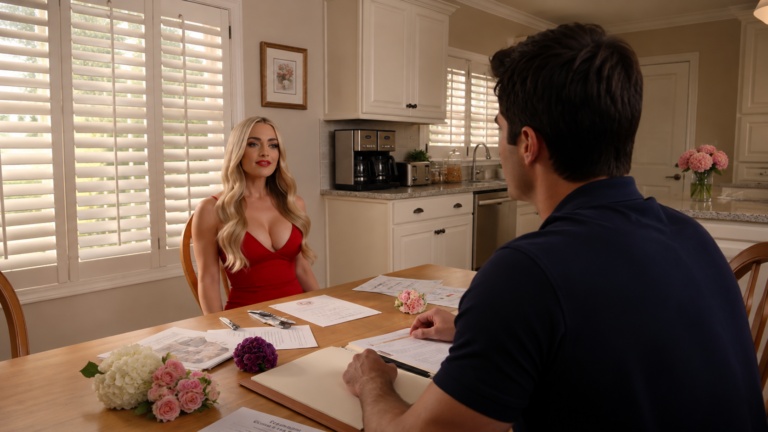
I could imagine him sitting at his kitchen table with the yellow curtains behind him, reading each new document while Sophie worked on homework nearby.
The image made me sad and proud at the same time.
He had stepped into fatherhood under circumstances no one should have engineered.
He was doing it without making Sophie responsible for his anger.
I wished I had shown the same care when our marriage began to crack.
That night, I wrote Connor a letter I did not intend to send immediately.
I described the ways I had hurt him without blaming boredom, Blake, or our routines.
I told him I understood that his patience had been a gift, not a guarantee.
I thanked him for the years when he made ordinary days feel safe.
Then I wrote that I would respect his decision even if he never changed it.
I read the letter twice.
It contained no request for another chance.