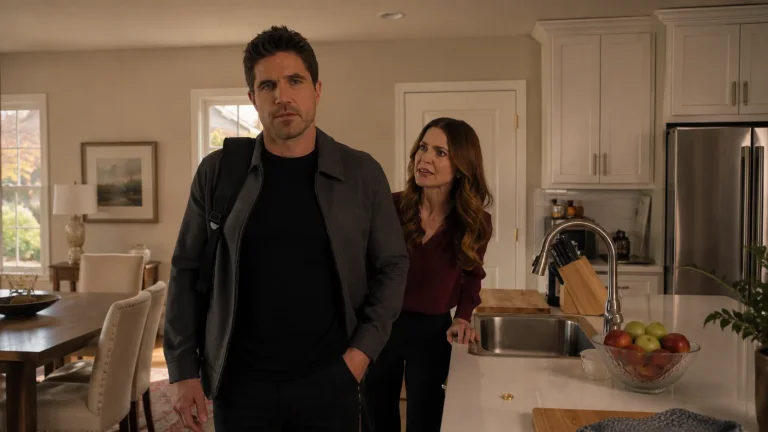
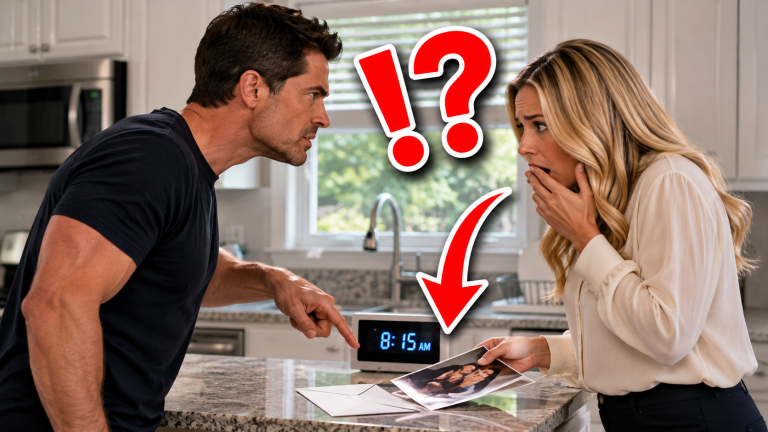
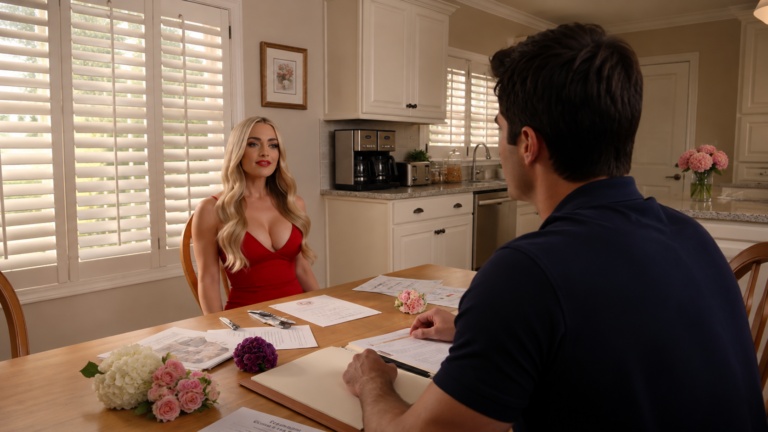
Instead, I said we were separated and that I was having a difficult week.
Angela pulled up a chair and listened.
I did not tell her every detail, but I admitted that I had been unfaithful and that Connor had left.
She did not excuse me.
She also did not turn my confession into a spectacle.
“You can be responsible for what you did without making every hour of your life a punishment,” she said.
I looked at her in surprise.
“What am I supposed to do with that?”
“Start by doing the next honest thing.”
It was not a grand piece of wisdom.
It was a practical instruction, and I needed one.
That weekend, I made an appointment with a counselor whose office was a fifteen-minute drive from our house.
I went alone.
The counselor, Dr. Patel, asked what I wanted from therapy.
I said I wanted my husband back.
She asked what I would want to understand if he never returned.
I had no answer.
For nearly an hour, we talked about the way I had confused stability with stagnation.
I described how Blake’s attention made me feel interesting and how Connor’s reliability had begun to seem invisible.
Dr. Patel did not let me hide behind the word boredom.
She asked what I had done when I felt disconnected from my husband.
I admitted that I had criticized him, avoided conversations, and sought affection elsewhere.
“Did you tell Connor you were unhappy before you began seeing Blake?” she asked.
“I complained that our life was predictable.”
“Did you ask him to work with you on changing it?”
I thought about the dinners he had planned and the weekend trips I had refused.
“Not really.”
The room was quiet.
I realized that I had wanted Connor to read my mind while refusing to listen when he spoke.
Dr. Patel asked me to write down three things I could take responsibility for without mentioning Blake or Connor’s behavior.
I wrote that I had lied.
I wrote that I had humiliated my husband when he tried to connect with me.
I wrote that I had treated his love as something I owned.
Seeing the words on paper was worse than saying them aloud.
But I did not cross them out.
On Monday, a certified letter arrived from Connor’s attorney.
I recognized the return address before I opened it.
Inside was a notice that Connor had filed for divorce.
The filing did not accuse me of crimes or demand revenge.
It requested an equitable division of our property and a clear process for resolving our finances.
There was a proposed temporary arrangement for the house while the case proceeded.
I read the pages sitting on the kitchen floor.
For weeks, I had told myself that his separation might be temporary.
The legal papers made his decision unmistakable.
I called him before I had time to reconsider.