CHAPTER 18: THE PRICE OF A CONFESSION
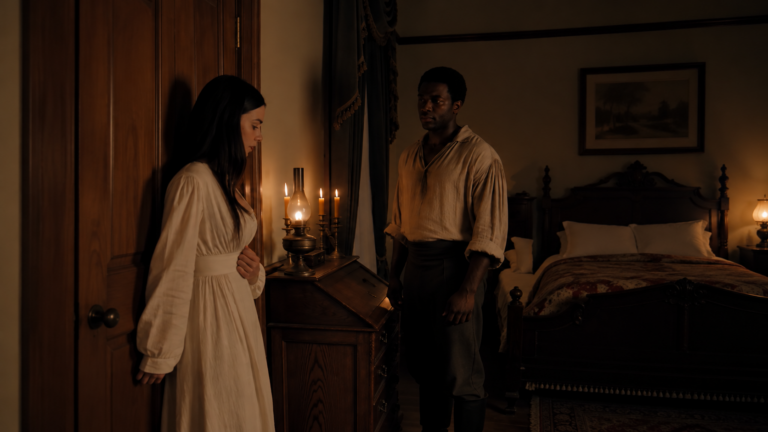
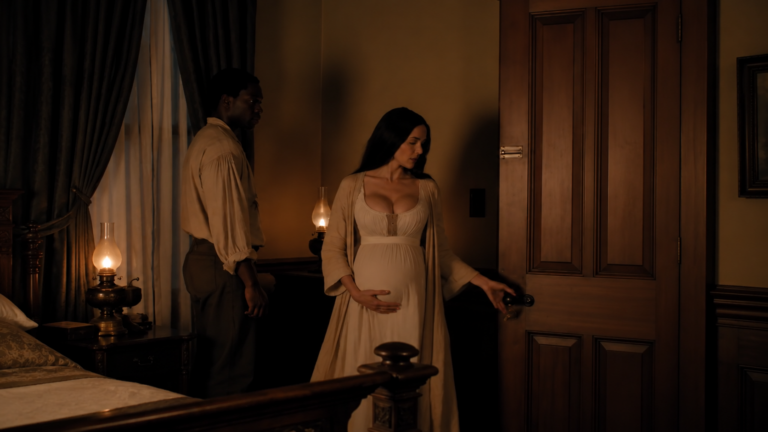
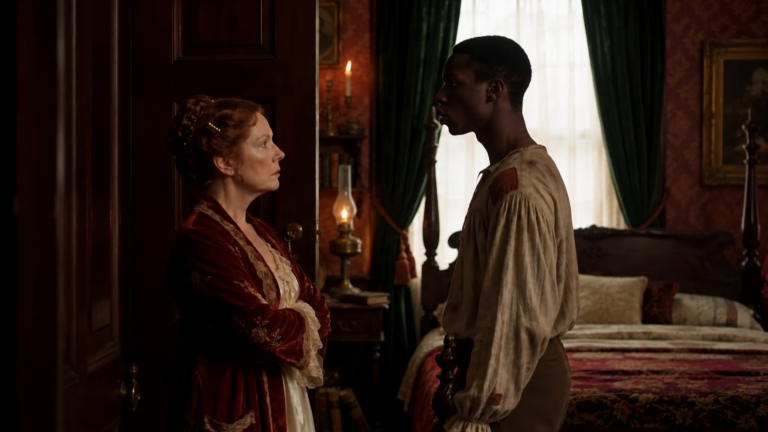
Isabella packed two trunks after Elias ordered her to leave his house.
Her relatives in Baton Rouge offered temporary shelter but wanted her to withdraw her accusations.
One wrote that public scandal would damage the family’s prospects.
Isabella read the letter before folding it into her traveling bag.
She told Price she would testify even if her relatives refused her a home.
The attorney warned her that honesty would not transform her into an innocent bystander.
She had signed papers and enjoyed the comfort of a household sustained by coerced labor.
Isabella said she understood.
Josiah heard about the exchange from Ruth and found the answer insufficient.
Understanding a wrong was not the same as repairing it.
When Isabella asked to speak with him before departure, he agreed only if Ruth was present.
She apologized for entering the stable and asking him to spend the night with her.
She admitted that the request had placed him in danger and had disguised her responsibility as a personal need.
Josiah listened without interrupting.
Isabella said she had once imagined that her unhappiness made her powerless.
She knew now that she had held power over others even while suffering in her marriage.
Josiah replied that he could not supply her forgiveness.
He asked what she intended to do with the property and income still under her control.
Isabella said she would place the funds she could legally access with Price to support claims, travel, and documented releases.
Ruth demanded written terms rather than a promise spoken in a hallway.
Isabella agreed.
Price prepared an agreement that afternoon and showed it to Bell for independent review.
Josiah did not mistake a legal instrument for justice.
He did believe that material commitments mattered more than apologies that left every privilege untouched.
CHAPTER 19: A REPLY FROM MRS. LAURENT
A reply arrived from the New Orleans boarding house nine days after the first letter was sent.
Mrs. Laurent confirmed that Miriam Reed had stayed with her after obtaining papers of freedom.
She remembered a quiet woman who sewed late into the night and asked repeatedly whether her children could be contacted safely.
Miriam had been warned that approaching Oakwood could expose her to danger and might endanger the children as well.
Mrs. Laurent had helped her send messages through a contact upriver.
None of those messages had reached Josiah or Ruth.
The letter said Miriam eventually traveled to a free community farther north with assistance from friends.
Mrs. Laurent had lost contact with her two years earlier.
She enclosed the name of a church secretary who might know more.
Ruth read the letter twice with Josiah beside her.
She cried when she came to the line about Miriam asking for her children.
For years she had feared her mother had abandoned them or died without a chance to speak.
The new evidence did not erase those years.
It did give them a more truthful account of her absence.
Josiah said they could not know whether Miriam had survived the journey or the years afterward.
Ruth agreed and asked him to write to the church secretary.
Mercy sat between them and listened as Ruth explained that her grandmother might be somewhere beyond the river.
The child asked whether a letter could travel that far.
Josiah told her that letters sometimes crossed distances people could not yet cross themselves.
He left out the fact that letters could also be intercepted.
That evening he made two copies of the message and placed them in separate envelopes.
He wanted one lost letter to be an obstacle, not the end of their search.