Chapter Sixteen: The Last Summons
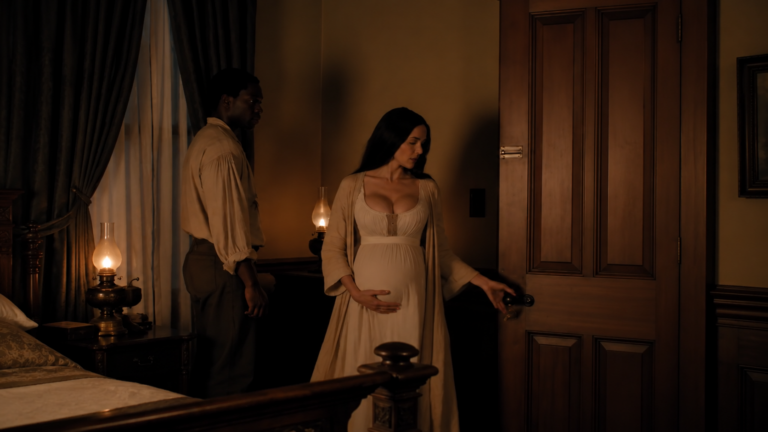
Mrs. Harrow’s child was born in January, after a difficult labor that left the household frightened for two days.
The baby was a girl.
Mr. Harrow held her with a tenderness Samuel had never seen him show toward the children working outside his windows.
Wren was no longer welcome in the house, and another physician attended the birth.
The new doctor spoke little about the scandal and much about keeping mother and child warm.
Samuel repaired the nursery window once more before winter rain came through the frame.
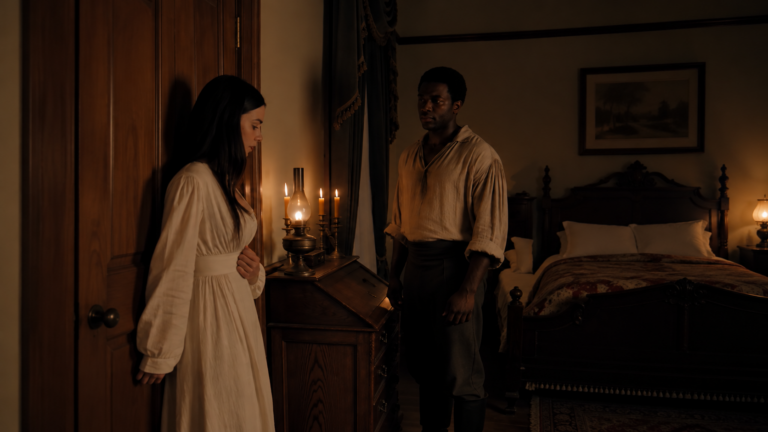
He worked in daylight while Nettie carried clean linen across the hall.
Mrs. Harrow watched from the bed.
“You have not been here at night,” she said.
“There has been no work that required it.”
“There was never work that required all of it.”
Samuel continued fixing the latch.
“I know.”
The baby stirred in her cradle.
Mrs. Harrow looked at her daughter, then at Samuel.
“I wish I had understood earlier.”
He fitted the last screw.
“You understood enough to give the orders.”
She took the words without replying.
“I will tell my daughter what happened,” she said finally.
“Tell her the names,” Samuel answered.
“All of them?”
“As many as you can remember.
”
She nodded.
Samuel gathered his tools and walked toward the door.
“Samuel,” she called.
He stopped with his hand on the latch.
“Thank you for coming when I called.”
He turned to face her.
“I did not have a choice.”
Mrs. Harrow lowered her eyes.
The baby began to cry.
Samuel opened the door and stepped into the hall.
He did not return when the crying grew louder.
Chapter Seventeen: The Names
The plantation changed in small, uneasy ways after the hearing.
Pike remained employed for a time, but Harrow ordered him to stop using the spinning shed for transfers.
Wren lost his arrangement with the estate, though rumors of other clients followed him along the river.
Mrs. Harrow kept to her rooms and refused to discuss the doctor’s treatment with visitors.
Samuel knew that these changes did not erase the danger around him.
The people in the quarters still worked under compulsion.
Families still feared the sound of wagons in the night.
A planter’s embarrassment was not the same as freedom.
Yet the people who had witnessed the transfers no longer allowed the names to vanish without protest.
Nell gathered the women beneath the oak when news arrived about a missing child.
Nettie sent messages through kitchen workers traveling between estates.
Ada asked every wagon driver whether he had seen families moved through Vicksburg.
Samuel repaired tools during the day and listened during the evenings.
He began teaching Ruth to recognize her own name in the brief moments when they could meet without supervision.
She learned the letters quickly and asked for more.
“Why do you want me to know this?” she asked.
“Because people who write about us can make lies look permanent.”
“Will reading stop them?”
“Not by itself.”
“Then what will?”
Samuel looked at the small wooden board between them.
“I don’t know everything that will,” he admitted.
“But I know that remembering is one part of it.”
Ruth traced her name again.
“I want to write Ellis’s name too.”
“Then we will start there.”
They worked until Nettie tapped twice on the porch post, warning them that Pike was approaching.
Ruth hid the board beneath a basket.
Samuel stood and picked up his tools.
The overseer walked past without stopping.
Only after he disappeared did Ruth let out the breath she had been holding.
Samuel understood that fear would remain with them for a long time.
He also understood that fear had not prevented the letters from taking shape beneath Ruth’s hand.
Chapter Eighteen: The Sound Before Dawn
One cold morning, Samuel woke before the first rooster called.
He lay still beneath his blanket, listening to the boards outside his quarters.
The night was quiet.
No candle moved beneath his door.
No servant waited with instructions from Mrs. Harrow.
For a moment his body did not believe the silence.
He sat up and put his feet on the floor.
Then he heard someone coming along the path.
His breath caught, and his hands curled against his knees.
The footsteps approached slowly, without the sharp rhythm he had learned to dread.
A voice called from outside.
“Samuel, it’s Nettie.”
He opened the door.
She stood holding a folded cloth and a small loaf of bread.
“Ada heard from Mrs. Dorsey,” she said.
“About the other children?”
“Three of them have been located.”
Samuel reached for the cloth.
Nettie shook her head.
“Eat first.”
“Tell me the names.”
She unfolded the message and read them aloud.
Samuel recognized one name immediately.
The child had carried a wooden bird through the nursery passage and refused to let Samuel take it away.
Another name belonged to a girl whose sister had waited by the well every evening for nearly a month.
The third was a boy Samuel had never seen.
He listened as Nettie repeated the locations and the names of the people searching for them.
“We still have work to do,” he said.
“Yes,” she answered.
He took the bread and broke it in half.
They sat on the porch while the eastern sky turned pale.
Across the yard, Ruth stepped outside with Ellis and began sweeping the packed earth in front of their quarters.
She stopped when she saw Samuel and raised one hand.
He raised his hand in return.
Nettie looked toward the distant main house.
“Do you hear anything?” she asked.
Samuel listened.
The house was quiet, and the path between it and the quarters stood empty.
“I hear the morning,” he said.
He unfolded the cloth again and read the three names before the sunlight reached the porch.
The End.