Chapter Twelve: The Wagon Gate
Pike moved toward the children while Harrow questioned the physician.
Samuel saw the overseer’s hand reach for Ellis’s shoulder.
“Stay with me,” he whispered.
Ruth stepped behind the injured woman.
Nettie blocked Pike’s path with a lantern.
“Mr. Harrow is speaking,” she said.
“Move aside,” Pike ordered.
“Then ask him whether you should take the children while he is asking what happened.”
Pike looked over his shoulder.
The planter was shouting at Wren about the plantation accounts and the men who had approved the transfers.
Pike turned back toward Nettie.
“You have made yourself a problem.
”
“I have been a problem for you before,” she said.
He raised his crop.
Samuel caught the movement and stepped forward.
“Do not touch her,” he said.
Pike wheeled toward him.
“You think the crowd makes you equal to me?”
“No,” Samuel answered.
“I think it means they will remember what you do.”
Pike looked at the faces beyond the lantern light.
The workers stood in a loose semicircle, silent and alert.
He lowered his crop without putting it away.
At the road, Mrs. Harrow called for her husband.
“The wagon cannot leave,” she said.
Harrow looked toward the driver.
“Nobody moves it until I have the truth.”
Wren gave a brittle laugh.
“You cannot hold my contracted transport.”
“I can hold anything on my property long enough to ask a question.”
Samuel felt an unpleasant flicker of recognition.
The same man who had denied the children a voice now spoke as if possession itself were a virtue.
He was using his authority against Wren because he believed he had been cheated.
Samuel did not expect that anger to become compassion by dawn.
Still, Harrow’s order kept the wagon in place.
Nell moved beside Ellis.
“Your mother is coming,” she whispered.
The boy’s face crumpled.
“How do you know?”
“I sent Amos to get her.”
“Will they let her stay?”
Nell took his hand.
“We will make them answer that in front of all of us.”
The injured woman touched Samuel’s elbow.
“My name is Ada,” she said.
“I know.”
“No, you do not.”
He turned toward her.
“My name is Ada Finch, and my son was taken toward Vicksburg last month.”
Samuel felt his stomach tighten.
“How old is he?”
“Seven.”
“What does he look like?”
“He has a scar above his left eyebrow, and he hums when he’s frightened.
”
Samuel remembered a child he had carried through the passage on a cold night in September.
The boy had hummed beneath his blanket.
Samuel had assumed the sound came from fear of the dark.
“I saw him,” he whispered.
Ada gripped his forearm.
“Where?”
“He was taken through the spinning shed.”
“Did he speak?”
“He asked for his mother.”
Ada closed her eyes.
Samuel wanted to tell her that he had done everything possible.
He knew that would not be true.
He had been frightened, exhausted, and often unable to act.
He would not ask her to make his silence easier to bear.
“I am sorry,” he said.
She opened her eyes again.
“Then remember his name when they ask.”
“Tell me.”
“Jonah.”
Samuel repeated it aloud.
Then he repeated the name of every child he could recall.
The people standing nearby listened.
A few answered with names of their own.
Wren stopped arguing long enough to hear the growing list.
For the first time, he looked frightened of something other than losing money.
Chapter Thirteen: The Magistrate
The magistrate arrived two days later with an assistant and a bored expression.
He had expected a dispute between gentlemen over unpaid medical fees.
He found a crowded dining room and a physician who refused to answer simple questions.
Harrow presented the invoices Wren had given him.
They described health examinations, household staffing, and transport arrangements.
Wren insisted the fees had been proper.
Mrs. Harrow sat beside her husband, pale and rigid.
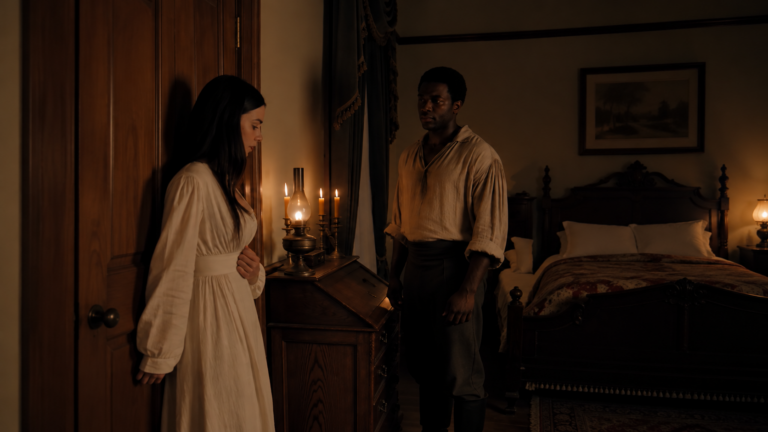
Samuel and Nettie waited in the gallery until the assistant called their names.
Pike stood behind them with his arms folded.
The magistrate asked Samuel whether he had carried people through the service passage.
“Yes, sir.”
“At whose direction?”
“Mrs. Harrow’s.”
The room went quiet.
“And where did you take them?”
“To the spinning shed.”
“Who collected them?”
“Mr. Pike and Dr. Wren.”
Pike stepped forward.
“He is confused by his late hours.
”
Samuel looked at the magistrate.
“I can name the people who were there.”
“Then do so.”
He began with Ellis and Ruth.
He named Dinah, Clara, Ada, Jonah, and others whose voices or faces remained clear in his memory.
The assistant wrote slowly, pausing whenever a name sounded unfamiliar.
Nell interrupted from the doorway.
“There are more.”
The magistrate frowned.
“Who allowed you inside?”
“The names did,” she answered.
Harrow ordered her to be silent.
Mrs. Harrow spoke before Nell could withdraw.
“Let her finish,” she said.
Harrow stared at his wife.
“This is my house.”
“Then you can hear what happened in it.
”
The magistrate was more interested in Wren’s contracts than in the suffering of the people named.
Samuel saw that clearly.
The man asked whether any child had been moved without the owner’s authorization, not whether the child had been frightened or separated from family.
Yet the questions created a public record Wren could no longer control alone.
When Ada named Jonah, the assistant stopped writing.
“That child was listed as a temporary household placement,” he said.
Ada leaned forward.
“Where is he?”
The assistant looked toward Wren.
The physician adjusted his collar.
“I cannot recall the address without consulting my papers.
”
“Then consult them,” Harrow snapped.
Wren hesitated.
For the first time, the magistrate sounded impatient with him.
“A seven-year-old boy is not an item to be misplaced in a memorandum,” he said.
The remark was limited, and Samuel knew it.
The same magistrate had shown little concern about the other children.
Still, it forced Wren to produce the address of a household outside Vicksburg.
Ada repeated the street and the name three times.
Nettie wrote them on a scrap of paper after the hearing.
Samuel watched her fold the paper into Ada’s hand.
A name and an address could not undo a forced separation.
They could create the next action.
Chapter Fourteen: The Cost of Speech
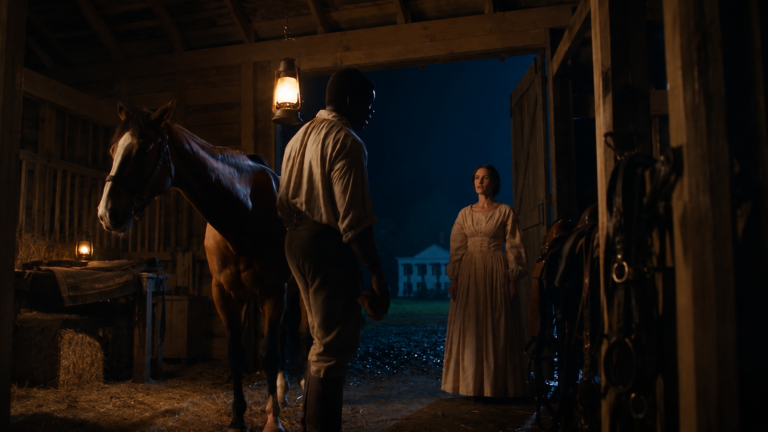
Pike confronted Samuel behind the tool shed before sunset.
“You think the magistrate will protect you?” he asked.
Samuel set down the saw he had been sharpening.
“No, sir.”
“Then you know how foolish you were.”
“I answered his questions.”
“You answered them as if the truth belonged to you.”
Pike moved closer.
“Mrs. Harrow is carrying a child, and you have brought disgrace into her house.”
Samuel held his ground.
“I did not bring the wagons here.”
Pike struck the shed wall with his crop.
“You should have learned your place.
”
“I know where I am.”
“Then you know I can have you moved before morning.”
Samuel looked toward the quarters, where a few workers stood watching from a distance.
“People will ask where I went.”
Pike’s eyes narrowed.
“And what will their questions accomplish?”
“I don’t know.”
The answer seemed to anger the overseer more than a boast would have.
“You have become a danger to yourself,” Pike said.
He turned and walked toward the house.
Samuel did not follow him.
His legs trembled only after the man was gone.
That night, Nettie brought food to his quarters.
“Pike is trying to have you transferred,
” she said.
“I expected that.”
“Harrow refused until the magistrate finishes.”
“That won’t last.”
“No.”
She sat beside him.
“Ada has found someone who will travel to Vicksburg.”
Samuel looked up.
“Who?”
“A woman named Mrs. Dorsey who operates a laundry there.”
“Can she bring Jonah back?”
“She says she will first learn whether he is still at the address.”
Samuel closed his eyes.
“I wish I had done more when he was here.”
“You did what you could while you were being threatened.”
“Sometimes I did nothing.”
“Sometimes you survived the night so you could try again.”
He looked at her.
“I don’t want survival to be the only thing I can say about my life.”
Nettie took his hand.
“Then we keep making other things happen.”
They sat in silence until the candle burned low.
Outside, footsteps approached across the yard.
Samuel stiffened before he could stop himself.
The footsteps passed without pausing.
He looked at the door long after the sound faded.
Nettie did not tell him he was safe.
She stayed until he could breathe evenly again.
Chapter Fifteen: The Winter Road
A week later, Ada received word that Jonah was alive.
The child had been placed in a household near Vicksburg, where he worked in a kitchen and slept in a pantry.
Mrs. Dorsey had seen him herself and spoken his name.
Ada cried when Nettie read the message aloud.
Then she asked what could be done to bring him home.
The question had no easy answer.
Harrow had not authorized Jonah’s transfer, but another man now claimed to own the boy through Wren’s arrangements.
The dispute would be argued by men who treated human lives as property.
Samuel watched Ada listen to their explanations without surrendering her anger.
“They keep saying the papers matter,” she told him.
“The papers matter to them.”
“My son matters to me.”
“I know.”
“Then help me make them answer with his name instead of a number.”
Samuel agreed.
He spoke to the magistrate again, this time describing the night Jonah had been carried through the service passage.
Nettie explained when the kitchen had prepared food for the travelers.
Nell named the women who had seen the wagon leave.
Mrs. Harrow confirmed that Wren had ordered the transfer without telling her the destination.
The testimony did not transform the world.
It did make it harder for Wren to deny the particular act that had separated Ada and Jonah.
At the end of December, the boy was returned to the plantation under a temporary order while the men argued over compensation.
Ada met the wagon at the gate.
She ran toward it before anybody could stop her.
Jonah stood on the wooden step, staring as if he had forgotten how to move.
Then he jumped into her arms.
Samuel turned away because the sight hurt more than he expected.
Nettie stood beside him.
“You should see this,” she said.
“I can hear it.”
Jonah was laughing and crying at once.
Ada kept repeating his name.
Samuel looked back.
The boy’s scar was visible beneath his cap, and his small hands clung to his mother’s shoulders.
For one moment the yard held something that had not been arranged by Wren, Pike, or Harrow.
It held a reunion that those men had tried to prevent.
Samuel knew other children were still missing.
He knew some would not return.
He knew that Ada could be threatened again and that her son’s presence did not make them free.
He also knew that their voices had brought one child back through the gate.
He let himself remember the sight without pretending it answered every question.