Chapter Three: The Physician’s Visit
The physician arrived the following Tuesday in a carriage with mud to its axles.
Dr. Silas Wren was small and brisk, with clean cuffs and a leather case he guarded more closely than his hat.
Nettie carried warm water to the upstairs bedroom while Samuel brought a box of charcoal for the fireplace.
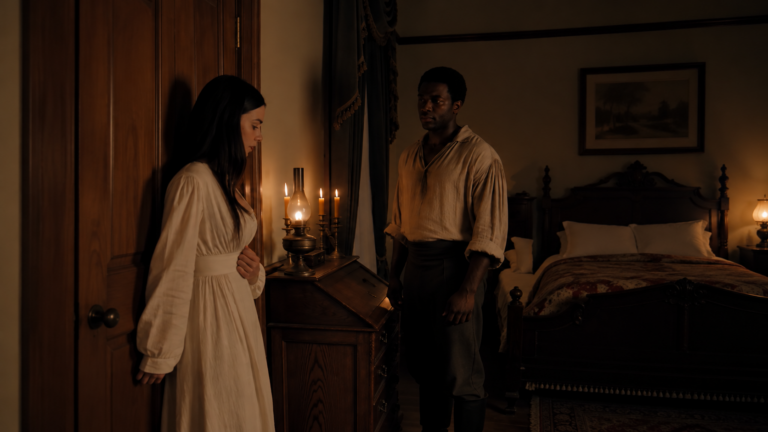
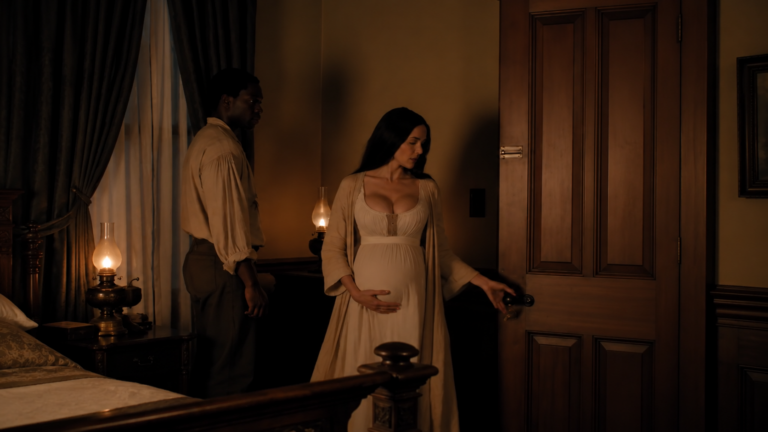
Mrs. Harrow was seated near the window, one hand resting against the curve of her stomach.
She was unmistakably pregnant.
Samuel stared for half a second before remembering to lower his eyes.
Her face changed when she saw him.
Dr. Wren looked from one to the other.
“This is the man who handles the late repairs?” he asked.
“He works where I tell him,” Mrs. Harrow said.
“I will need him again tonight,” the physician replied.
Samuel placed the charcoal beside the hearth.
“What repairs do you require, sir?”
“That will be explained.”
Mrs. Harrow rose too quickly and gripped the chair.
The physician moved toward her.
“You should be resting.”
“I am not ill.”
“You must not agitate yourself.”
She looked at Samuel with an expression that might have been warning or apology.
“He can leave,” she said.
In the hall, Nettie caught his wrist.
“She is carrying a child,
” she whispered.
“I saw.”
“Then the household will become more dangerous.”
“It already has.”
Nettie looked toward the bedroom.
“Wren visited the south fields last spring.”
“For what reason?”
“He examined women who had just given birth.”
“That is what physicians do.”
“He asked which families had daughters between ten and fourteen.”
Samuel felt a cold pressure behind his ribs.
“Why would a physician ask that?”
“The women asked the same thing.”
From the bedroom came the sound of a glass breaking.
Mrs. Harrow shouted for Samuel, and he returned immediately.
The physician was kneeling beside his case.
A small bottle lay shattered beneath the dresser.
“Get a cloth,” Wren ordered.
Samuel lifted the fragments carefully.
The liquid smelled sharp and medicinal.
“You will not speak of what you see here,” Wren said.
“I have no reason to speak of it.”
“You are mistaken about reasons.”
Samuel looked up.
The doctor’s expression was mild, almost amused.
“A man who knows how to keep his mouth shut may survive a great deal,” Wren said.
Mrs. Harrow turned toward the window.
Her silence struck Samuel harder than the threat.
He had imagined that she controlled the night work because she wanted to.
Now he suspected she was frightened of someone who stood above her in the household’s private arrangements.
That suspicion did not make her innocent.
It made the danger harder to understand.
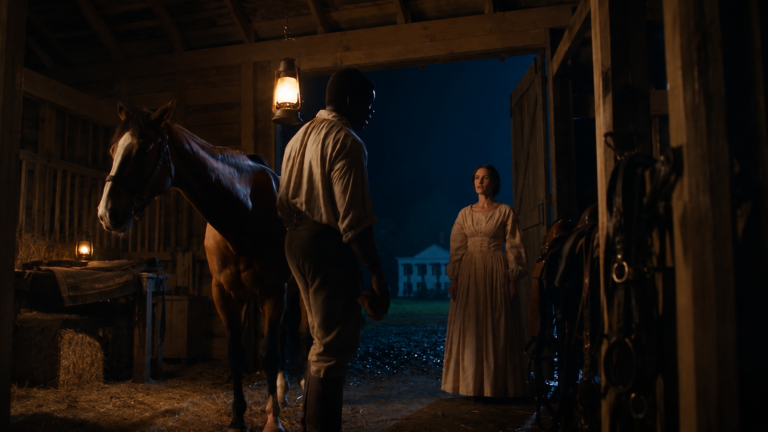
That night, Samuel was ordered to clean the spinning shed and prepare two cots instead of one.
Wren examined the room by lamplight while Pike waited beside the rear door.
“This place is unsuitable,” the physician said.
“It has served us well enough,” Pike answered.
“You have never been required to answer questions about a patient.”
“These are not patients,” Pike said.
Wren gave him a long look.
“You should learn the words that protect the people who pay you.”
Samuel kept his attention on the loose rear bolt.
Wren ordered fresh linen, clean water, and a stove moved near the door.
A woman would be brought here before dawn.
Samuel wanted to ask whether she was ill.
He remembered Ellis and said nothing.
As Wren left, a paper slipped from the side pocket of his leather case.
Samuel saw a printed heading and three handwritten names.
The physician retrieved it before Samuel could read more than the first line.
“Transfer schedule,” Wren muttered.
Pike held the lantern higher.
“The buyers want the child first,” he said.
“The buyers will get what I say they can have,” Wren replied.
Samuel’s hands went numb.
The physician glanced back at him.
“What did you hear, Reed?”
“The rain on the roof, sir.”
Wren smiled.
“Then continue listening to that.”
Chapter Four: The Name on the Blanket
Ellis returned to the shed three nights later, but this time he was not alone.
An older girl sat beside him with her hands folded tightly in her lap.
She introduced herself as Ruth, and she refused to tell Pike where she had hidden a shoe.
The overseer searched the cot and the floorboards while she watched with fierce concentration.
“You won’t need shoes where you’re going,
” he told her.
Ruth did not answer.
Samuel recognized her stubborn expression because it belonged to people who were afraid but unwilling to surrender the last thing they controlled.
When Pike stepped outside to speak with the driver, Samuel brought water to the two children.
“Where is your family?” he asked Ruth.
“My father works at the cotton press across the creek.”
“Does he know you’re here?”
“They said I’d be allowed to see him tomorrow.”
“Who said that?”
“The doctor.”
Ellis leaned forward.
“He said my mother would come too.”
Samuel wanted to offer a promise.
He could not bear to give one that might become another lie.
“Drink your water,” he said.
Ruth caught his sleeve.
“They put a blue mark on the back of my dress.”
Samuel looked at the collar and saw a short stripe of chalk.
“What does it mean?”
“The driver said I was the second.”
“The second what?”
She shook her head.
“He wouldn’t tell me.”
Samuel placed the cup on the floor.
The children were not being moved at random.
Somebody was selecting them, counting them, and placing them in an order.
He looked toward the rear door, where the loose bolt shifted in its socket.
He had built a possible way out,
but he did not know whether the route beyond it led anywhere safe.
He returned to the main house before midnight and found Mrs. Harrow waiting in the nursery.
She was sitting in the dark with a folded baby blanket on her knees.
“The cradle needs another rail,” she said.
“I’ll make one tomorrow.”
“It must be finished before the doctor returns.”
Samuel did not move.
“Why are the children in the shed?”
Her fingers tightened around the blanket.
“You were not asked to question me.”
“Ellis has been waiting for his mother.”
“There are things you do not understand.
”
“Then tell me.”
She rose sharply.
“You forget your position.”
Samuel felt the old fear rise in him, but the memory of Ruth’s chalk mark held him steady.
“I remember my position every night I walk here,” he said.
“You think I can protect you if you speak that way?”
“You haven’t protected Ellis.”
She slapped the blanket against the cradle.
“Get out.”
Samuel turned toward the door.
“And Samuel,” she said.
He stopped.
“You must not tell my husband about the children.”
“Why?”
Her voice became unsteady.
“Because if he learns what Wren is doing before I can stop it,
he will believe that I arranged all of it.”
“Did you?”
She stared at him.
The silence was answer enough to make him sick.
“I arranged the first visit,” she said finally.
“I did not understand where it would lead.”
“You arranged people being taken from their families.”
“I believed they would be moved temporarily.”
“You knew they could not refuse.”
She lowered her eyes.
Samuel stood waiting for an admission that did not come.
“You have to help me,” she whispered.
He looked at the unfinished cradle.
“I have been helping you every night,” he said.
Then he walked away.
Chapter Five: What the Pregnancy Proved
The next morning Mrs. Harrow asked Samuel to meet her in the pantry while the kitchen was empty.
Nettie saw him enter and deliberately sent the scullery boy to fetch water from the far pump.
Mrs. Harrow stood beside the shelves with both hands on her stomach.
“My husband believes this child will save our marriage,” she said.
Samuel waited.
“He has been told that I cannot bear children without treatment.”
“Who told him?”
“Dr. Wren.”
“Was that true?”
“I don’t know.”
She swallowed.
“I spent years listening to men tell me what my body could and could not do.”
“That does not explain Ellis.”
“Wren said the women he moved would work as nurses and attendants in another household.”
“Why were they locked up?”
“He said the arrangements required secrecy.”
“You saw frightened children.”
“I know.”
“You asked me to keep carrying them.”
“I know.”
The woman who had commanded him nightly now looked unable to hold a single thought without dropping it.
Samuel felt no comfort in her fear.
“Why are you telling me this?” he asked.
She opened a drawer and removed a strip of pale linen.
It bore a little stitched circle near one corner.
“This is how Wren marks the bundles,” she said.
“Bundles of what?”
“Children who are meant to be delivered with their mothers.”
Samuel stared at the cloth.
“Delivered where?”
“To families who claim they have paid for domestic placements.”
“Are those families buying them?”
Mrs. Harrow did not answer.
“And the children who arrive alone?” Samuel pressed.
“Wren says their mothers agreed.”
“Their mothers are not free to agree.”
Her face crumpled.
“I understand that now.”
Samuel shook his head.
“You understood enough to hide the passage.”
The pantry door rattled as somebody crossed the gallery.
Mrs. Harrow held her breath until the footsteps faded.
“My pregnancy changes everything,” she said.
“How?”
“The doctor promised my husband that his treatment produced an heir.”
Samuel frowned.
“You said you did not know whether treatment was necessary.”
“There was none.”
“What do you mean?”
“He gave me powders and instructions, but I stopped taking them months ago.”
Samuel watched her carefully.
“Then your pregnancy proves he lied.”
“It proves he lied about something that made my husband pay him.”
“And the money came from where?”
“The plantation accounts.”
“From selling people.”
She looked away.
The words remained in the pantry like a physical object neither of them could move.
Samuel finally understood the connection.
Wren had persuaded Harrow that a special household program would produce a child and strengthen the estate.
The program used enslaved women and children as goods to be transferred, examined, or exchanged under harmless names.
Mrs. Harrow had participated because she wanted the promise of a child and the power of being considered useful.
Now the child growing inside her made the physician’s claims vulnerable.
It also made Mrs. Harrow vulnerable to anyone who could expose what she had helped conceal.
“Why have you kept me here?” Samuel asked.
“Because you saw everything.”
“You could have told the truth.”
“My husband would ruin me.”
Samuel stared at her.
“He could ruin me without asking what happened.”
She did not deny it.
“Wren wants you sent away before the child is born,” she whispered.
Samuel felt the floor shift beneath him.
“Where?”
“I haven’t agreed.”
“That isn’t an answer.”
“I cannot stop him alone.”
“You were never alone when you ordered me here.”
The pantry door opened.
Nettie stepped inside with a bucket and saw their faces.
“Pike is coming,” she said.
Mrs. Harrow quickly concealed the cloth.
Samuel moved toward the rear entrance.
Nettie caught his eye.
Her expression said she had heard more than enough.