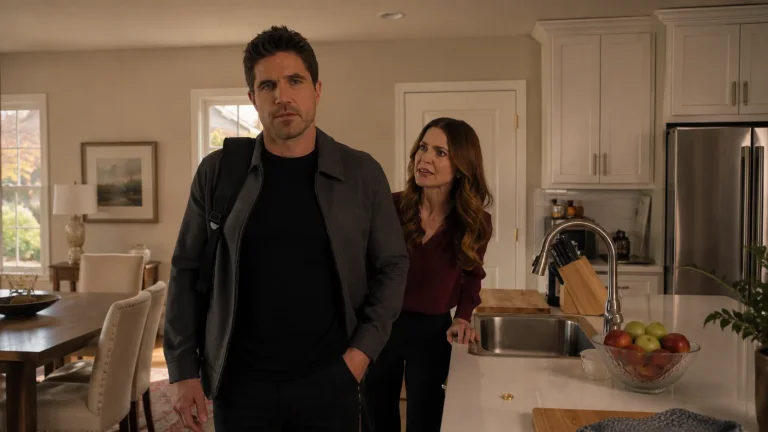
I stopped on my own driveway, keeping the distance between us.
She said I had turned the neighborhood against her.
I replied that residents had asked questions because the information they received did not match the documents.
She said I had never understood what she was trying to accomplish.
I asked whether she wanted to explain it with her attorney present.
Her expression hardened.
She said lawyers had a way of making ordinary conversations sound criminal.
I told her I would not discuss the investigation in the street.
She looked at our garage roof and asked whether I was pleased with myself now that the panels had been replaced.
I said I was relieved that the system was safe again.
She opened her mouth as though she wanted to say more, then turned and walked back to her house.
I wrote down the exchange as soon as I went inside.
The conversation left me uneasy because her anger seemed genuine, but it offered no explanation for the damage.
That evening Allison said Vivian might be frightened by the consequences of her own decisions.
I said fear did not excuse threatening a family or misrepresenting their consent.
Allison agreed, but she reminded me that we did not need to hate Vivian in order to insist on accountability.
I had been thinking of justice as a door that opened only after somebody admitted what they had done.
Allison was beginning to show me that justice could also mean refusing to let somebody else’s choices determine the shape of our lives.
The next development came from the county rather than the police.
A planning staff member notified affected homeowners that Northpoint had withdrawn its preliminary request to place the equipment shelter beside the old culvert.
The withdrawal did not prohibit the company from proposing a different route in the future.
It did mean the disputed access documents would not be used to support the existing application.
Residents received the notice directly instead of through a neighborhood liaison.
Margaret read the letter aloud at the kitchen table while Harold checked the attached map.
For a moment nobody spoke.
Then Sophie asked whether the tomatoes could stay where they were.
I told her the immediate proposal to disturb that part of our yard had been withdrawn.
She wanted to know whether that meant forever.
I said it meant we had a chance to make decisions based on real information rather than threats.
She accepted that answer and returned to drawing a little fence around her garden in a school notebook.