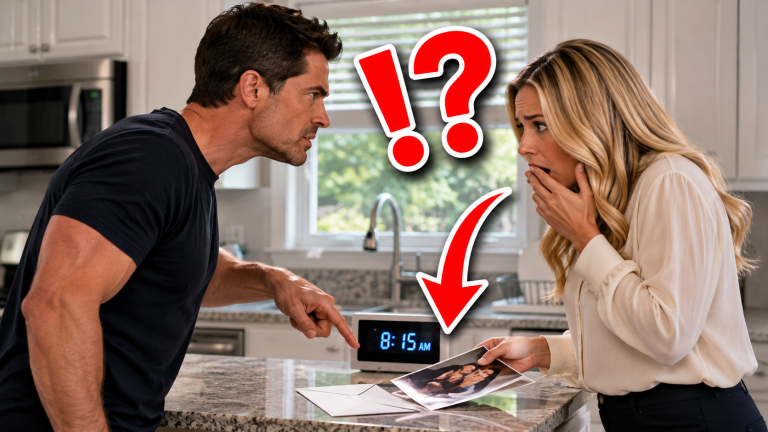
The receptionist asked whether I wanted to speak with him.
“No,” I said.
I asked her to tell him that any necessary communication should go through our attorneys.
Tyler did not leave immediately.
He stood outside the entrance for several minutes, looking at his phone.
Then he placed an envelope on the reception desk and walked away.
I did not open it at work.
My supervisor documented the visit, and I took the envelope directly to my attorney.
Inside was a short handwritten letter.
Tyler claimed that Victor had promised to help him start a business if he introduced me to certain people and kept Victor informed about the trust dispute.
He also claimed that he had not understood how far Victor intended to go.
At the bottom, he asked me to meet him privately so he could explain the rest.
My attorney read the letter twice.
“We are not arranging a private meeting,” she said.
“I wasn’t planning to,” I answered.
She asked whether I wanted to forward the letter to Helen and the outside reviewers.
I agreed, provided they received the original and a record of how it had reached me.
The reviewers later contacted Tyler through his lawyer.
I was not told everything he said, and I did not demand to know.
A few days afterward, Helen informed me that Tyler’s account was being compared with financial records and other witness statements.
She warned me that a person’s willingness to talk did not automatically make every part of that person’s story reliable.
I understood her caution.
I had once believed Tyler because he said exactly what I wanted to hear.
I would not make the same mistake simply because he now claimed to be afraid.
That evening, my phone displayed an unfamiliar number.
I let it go to voicemail.
A man’s voice asked me to return a call about an opportunity to resolve the entire matter quickly.
He gave no firm name and no case reference.
I saved the recording and sent it to my attorney.
She advised me not to respond until the caller’s identity and purpose could be verified.
For the rest of the night, I felt the old urge to make everything stop by doing whatever the loudest person demanded.
I made tea instead.
I washed the dishes.
I checked the locks and went to bed.
The next morning, the world was still complicated, but I had not made it worse.
CHAPTER THIRTY-TWO: WHAT THE COMMITTEE FOUND