Chapter Nine A: The Passenger Who Was Not on the List
The deputy’s radio cracked while Nadia was asking for another update.
Kent listened to a voice that sounded unusually careful.
She turned away from the crowded counter and walked toward the service hallway.
Emily followed only because Kent beckoned her.
“The driver says he has twelve passengers,” Kent said.
“Our missing-person list has thirteen names.”
Emily stopped beside the ice machine.
“Who is missing?” she asked.
Kent showed her a photograph on the dispatcher’s screen.
A woman in a green raincoat stood beside a small boy at the entrance to Bellwether Court.
“Her name is Inez Calder,” Kent said.
“Her sister reported that she boarded the bus at four thirty.”
Emily recognized the woman from the morning’s confusion.
She had seen her briefly through a window of the seventh SUV.
“She was with the families outside,” Emily said.
Kent looked at her sharply.
“Are you certain?”
“She was holding a blue shopping bag with one broken handle,” Emily replied.
“She asked the driver where the bus had gone.”
Kent lowered the phone.
“Then the missing list is wrong,” she said.
“Or someone wants us looking for a person who is already safe.
”
Emily returned to the dining room and searched the faces by the windows.
The woman with the blue bag was no longer there.
Nadia remembered her immediately.
“Inez said she needed to find her sister,” Nadia explained.
“She left in a car with a man from the relocation office.”
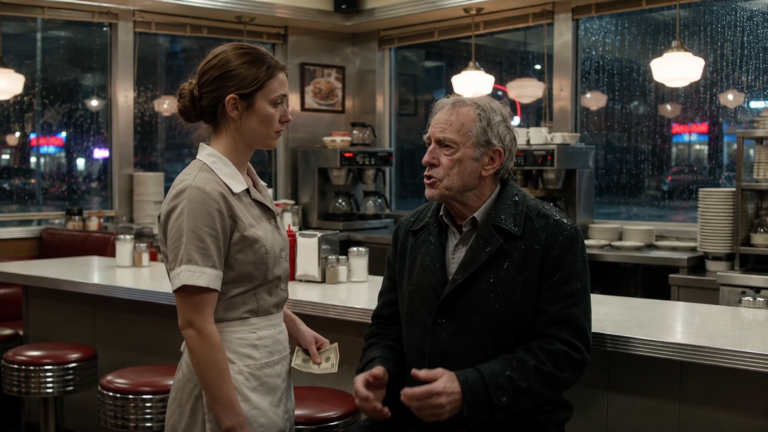
Samuel stood so abruptly that his cane struck the table.
“What man?” he asked.
Nadia shook her head.
“He had a badge on his coat,” she said.
“He told us he was taking her to the medical station.”
Kent asked Adrian to bring every driver back inside.
The deputy kept her voice low,
but Emily heard the urgency beneath it.
“Nobody leaves this parking lot without telling me where they are going,” Kent said.
“We are not holding anyone here, but I need to know who is transporting whom.”
A man from the third SUV objected immediately.
“We’ve already been stopped twice,” he said.
“My daughter needs her breathing treatment.”
Kent faced him rather than dismissing his fear.
“I can arrange a direct escort to the clinic,” she answered.
“I won’t ask you to wait while she struggles to breathe.”
The man looked at his daughter and nodded.
Emily watched the exchange from behind the counter.
The families were frightened of strangers who promised transportation.
Every new instruction sounded to them like the beginning of another separation.
She understood why the vehicles had traveled together.
She also understood that twelve cars could not protect anyone if their drivers trusted the wrong person.
Chapter Nine B: A Badge Without a Name
Adrian brought a stack of paper badges into the diner.
Each badge carried a colored stripe and the printed name of a temporary shelter.
“These were handed out at Bellwether,” he said.
“The families were told to wear them so transport workers could identify their destinations.
”
Kent picked up one badge and examined its reverse side.
“There’s no issuing organization,” she said.
“There isn’t even a telephone number.”
Samuel pointed at the orange stripe.
“Inez had that color,” he said.
“Her sister was assigned blue.”
Emily remembered the green raincoat and the blue shopping bag.
“Why would they give sisters different destinations?” she asked.
“They said the shelters were separated by medical need,” Adrian replied.
“Inez refused to leave until someone explained it.”
Grant emerged from the kitchen and paused when he saw the badges.
He moved closer, then stopped himself.
“I’ve seen those,” he said.
Kent turned toward him.
“Where?”
Grant pointed to the service entrance.
“The driver who rented the lane dropped a handful beside the trash bins,” he answered.
“I swept them into the garbage before the breakfast rush.”
Emily looked at the full wastebasket beside the coffee station.
Grant had emptied the kitchen bins that morning.
“Which dumpster did you use?” she asked.
“The blue one,” he said.
“The collection truck comes on Thursdays.”
Kent checked her watch.
It was Wednesday.
She sent a uniformed officer to secure the dumpster before anyone could disturb it.
Grant rubbed his burned hand against his apron.
“I didn’t know they were important,” he said.
“You knew enough to take payment for the lane,” Kent replied.
Grant looked away.
Samuel stepped toward the window, where rain had begun to run down the glass again.
“We keep finding things after the people are gone,” he said.
Emily heard the defeat in his voice.
“Then we have to stop chasing things and start asking the people who are still here,” she replied.
She walked to Nadia and asked whether Inez had spoken to anyone before leaving.
Nadia thought for a moment.
“She asked Lucia to remember a number,” she said.
“She said children were better at remembering numbers than adults.”
Emily felt her pulse quicken.
“What number?”
“Lucia wouldn’t tell me,” Nadia answered.
“She said Inez asked her not to say it where strangers could hear.”
Kent reached for her radio.
“I want an officer with Lucia when she arrives at the staging area,” she said.
“Nobody questions that child without a parent or guardian present.”
Emily nodded.
She was grateful that the deputy had said it aloud.
A frightened child should not become another tool for adults who believed their urgency excused everything.
Chapter Nine C: The Wrong Road
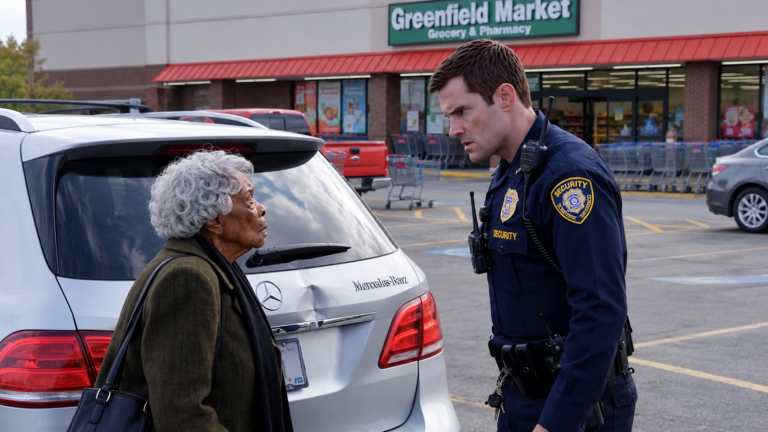
At the market, officers had surrounded the bus without approaching its doors.
The driver had pulled the curtains across the windows.
Through a narrow gap, a deputy could see two adults seated in the front row.
Someone farther back was holding a white towel against the glass.
The driver told police that the passengers had requested privacy.
He also claimed that a second bus would arrive to take them to a medical facility.
Kent listened to the updates while Adrian spread the county map across the counter.
“There’s no medical facility on that road,” he said.
“The old grain warehouse is the only building beyond the market.
”
Grant looked at the map from the kitchen doorway.
“There’s a truck scale behind the warehouse,” he said.
“It still works when the power is on.”
Emily glanced at him.
“How do you know that?”
“I used to deliver supplies there,” he replied.
“Before I bought the diner.”
Kent asked whether the warehouse had another exit.
Grant pointed to a narrow road that curved around the northern fence.
“That road goes to a maintenance yard,” he said.
“The gate is usually chained.”
“Usually?” Kent asked.
“The chain was missing last month,” Grant answered.
“I noticed it when I took a shortcut home.
”
The deputy transmitted the information to officers at the market.
Minutes later, a second patrol car moved toward the maintenance yard.
Emily watched Kent’s expression as she listened.
“They found fresh tracks,” Kent said.
“Someone drove a van through the yard this morning.”
Samuel leaned against the counter.
“That van was behind our diner,” he said.
“It reversed when we approached.”
“We don’t know whether it was the same vehicle,” Kent cautioned.
“We know someone is using roads that aren’t on the transport plan,” Emily replied.
Kent acknowledged the distinction with a nod.
She called the officer at the maintenance yard and asked him to photograph the tire impressions without entering the warehouse.
Grant stared at the map as though it might change beneath his hands.
“I thought the contractor was moving equipment,” he said.
“He told me they were relocating a kitchen.”
“You didn’t ask which kitchen?” Emily asked.
Grant had no answer.
Chapter Nine D: Lucia’s Number
Lucia called Nadia from the staging area while the police were still negotiating with the driver.
The girl’s voice sounded smaller over the phone than Emily remembered.
“Inez told me to remember six numbers,” Lucia said.
“She said I should only tell someone who could say my mother’s name.”
Nadia told her that she was safe and that her mother was listening.
Lucia recited the number slowly.
Nadia wrote it on a paper napkin.
Adrian recognized the first three digits as the prefix used for county vehicle assignments.
“It’s probably a bus number,” he said.
Kent asked him not to guess in front of the child.
“Lucia, did Inez say what the numbers meant?” the deputy asked.
“She said it was on the side of the white van,” Lucia answered.
“The man with the silver ring covered the last number with his hand when she looked.”
Kent wrote down the sequence.
“You did exactly what she asked,” she told Lucia.
“Now you can rest.”
The girl hesitated.
“Is Inez in trouble?” she asked.
Nadia closed her eyes.
“We’re trying to find her,” she answered.
“You helped us understand where to look.”
After the call, Kent compared the digits with the county’s transport contractor database.
The sequence did not belong to a bus.
It identified a temporary loading permit issued to a freight company.
The permit listed the old grain warehouse as its destination.
Adrian looked at the map again.
“Then the warehouse matters,” he said.
“The permit may be legitimate,” Kent replied.
“But now I have a reason to ask the company who is using it.”
The company dispatcher answered on the second ring.
She said the permit had been canceled the previous week.
She also said the white van assigned to that permit had been reported missing from a fenced yard.
Kent ended the call and asked the dispatcher to send the report directly to the officers at the market.
Samuel stared at the napkin with the six numbers.
“She knew someone might take her away,” he said.
Emily touched the back of a chair to steady herself.
“She also knew Lucia might be the only person who could help,” she answered.