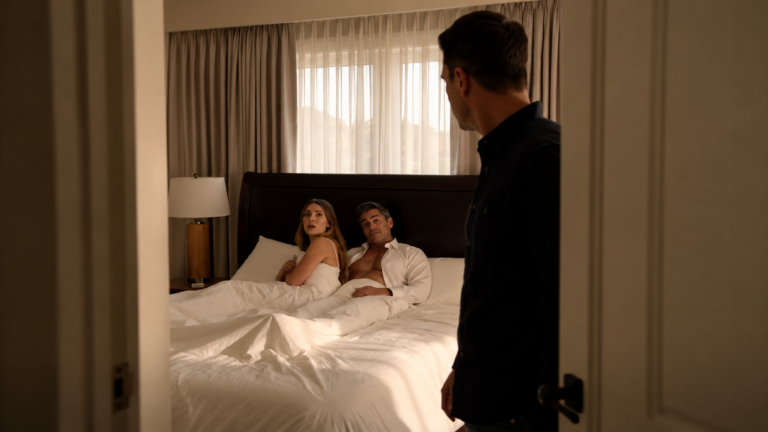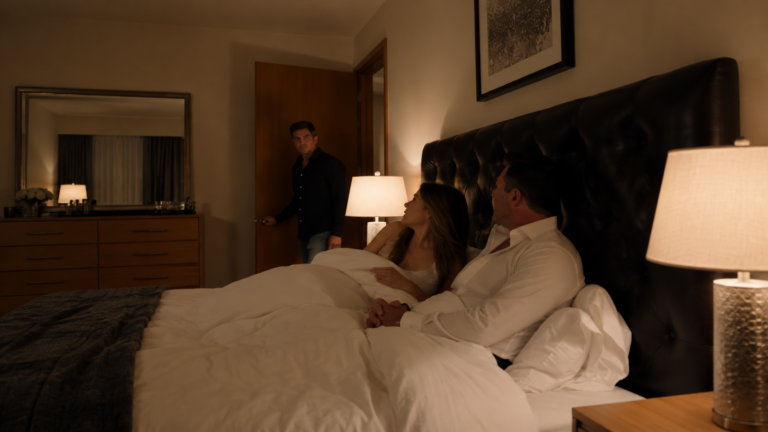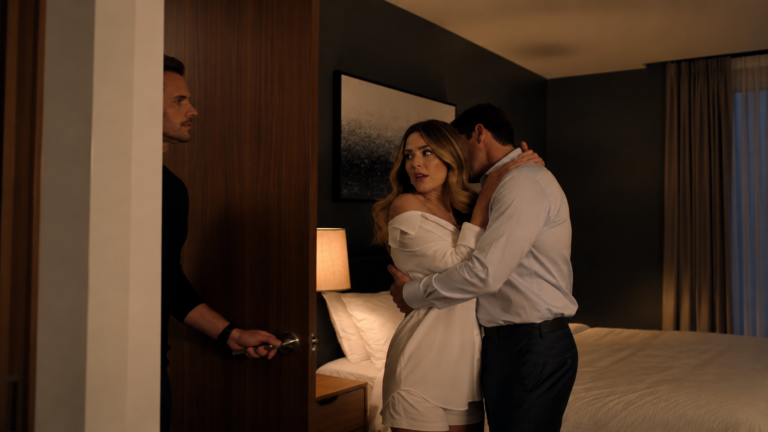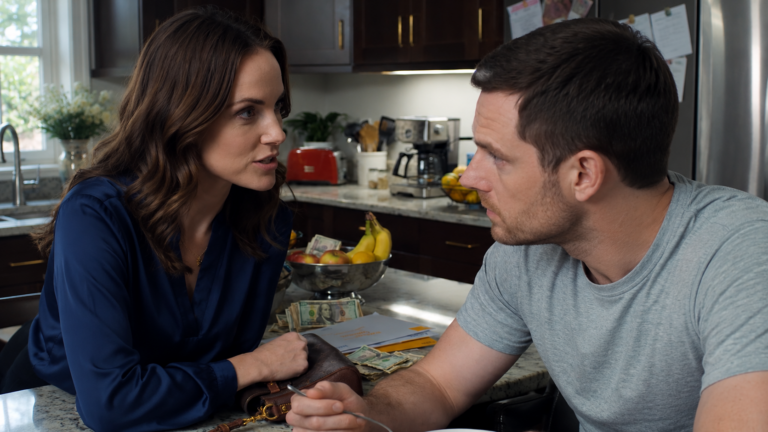
The first thing Daniel Mercer noticed about the attachment was not his wife’s signature.
It was the photograph of a yellow mountain tram at the top of the page.
He had seen that tram two hours earlier through the airport shuttle window, climbing the dark shoulder of Lookout Ridge like a toy drawn upward by a string.
He had admired it because it represented exactly the sort of complicated operation he had moved to Denver to manage.
Now his name appeared directly below the photograph.
Daniel sat on the edge of his suitcase in a rented apartment that still smelled of fresh paint.
The airport was thirty minutes behind him, and Vanessa’s seventeen messages remained unopened.
He read the email from Marcus Reyes twice.
Before you sign anything your wife sends you, there is something you need to know about the Denver job.
Attached was a six-page document titled Preliminary Passenger Readiness Certification, North Summit Demonstration.
Its fourth page carried a typed statement asserting that all passenger approaches, emergency exits, and weather contingencies had been independently checked.
The signature below belonged unmistakably to Vanessa.
She dotted the last letter of her name with a small, unnecessary circle whenever she signed in a hurry.
Daniel knew that detail from fourteen years of birthday cards, restaurant bills, and apartment leases.
Underneath was another signature line.
His own name had been printed there, followed by the words Incoming Operations Director.
But Daniel had never seen the document before.
The date was five weeks earlier, three days before he had called the Denver hiring director to ask whether the job was still available.
He scrolled back to Marcus’s message.
I thought she was arranging a clean break.
She told me you knew about the pilot and wanted the position because of it.
I learned this afternoon that she was wrong,
or that she lied to me.
The last sentence had been added separately.
The certification isn’t valid without you, and the demonstration is tomorrow.
Daniel called the number at the bottom of the email.
Marcus answered on the second ring, his voice quieter than Daniel expected from a man who wrote cheerful articles about distant beaches.
“Tell me exactly what I’m looking at,” Daniel said.
“Are you alone?”
“That question has already cost me most of my evening.”
“I’m sorry,” Marcus replied.
“I know that doesn’t mean much.”
“It doesn’t.”
“Vanessa was hired to evaluate the passenger experience for a new aerial tram demonstration.
”
Daniel stared at the printed name of his prospective employer, Summit Arc Mobility.
“She works in communications,” he said.
“She freelances on visitor surveys,” Marcus answered.
“She took this contract through a company I was writing about.”
“What company?”
“ClearPath Guestworks.”
Daniel recognized it immediately.
His new boss had mentioned ClearPath during his final interview as an outside consultancy that handled visitor communications.
“Why is my name on their safety certification?”
Marcus hesitated.
“Because they’re going to tell tomorrow’s investors that the incoming operations director personally approved the passenger route.”
“I haven’t even reported for work.”
“I know.”
“Why would Vanessa sign something like that?”
“She thought the tram was already approved,
” Marcus said.
“At least that’s what she told me.”
“And what did she tell you about me?”
Another silence followed.
“That you were staying in Charlotte while she figured out what she wanted.”
Daniel watched the tram photograph until its bright yellow shell blurred.
“You got that part right,” he said.
“She wanted me to wait.”
Marcus swallowed audibly.
“I need you to understand something else.”
“Go ahead.”
“That mountain has been closed to ordinary visitors since Tuesday.”
“Why?”
“The upper unloading platform doesn’t work properly when the wind changes direction.”
Daniel stood so quickly that his suitcase tipped against the wall.
“Who told you that?”
“A woman who helped build it.”
“What’s her name?”
“Nadia Flores.”
Daniel looked down at the document again.
Nadia’s name appeared in the distribution list, but she had not signed.
He heard traffic outside his new apartment.
He heard a neighbor laugh somewhere beyond the hallway.
And beneath those ordinary sounds, he imagined the little yellow tram suspended above an enormous drop.
“Where are you?” he asked.
“Denver.”
“Where exactly?”
Marcus gave him the name of an all-night diner near Union Station.
Daniel grabbed his jacket.
“I’m coming,” he said.
CHAPTER TWO — THE DINER
Marcus had the lean,
sunburned face of someone who spent more time photographing scenery than sleeping.
He wore a blue windbreaker and looked genuinely uncomfortable when Daniel slid into the booth opposite him.
Two untouched coffees stood between them.
“I didn’t order anything for you,” Marcus said.
“Good.”
Marcus pushed a paper folder across the table.
Daniel left it closed.
“Start with Vanessa,” he said.
Marcus looked at the silver wedding band still on Daniel’s hand.
“She told me she was separated.”
“She told me she wanted to try dating you while I stayed available.”
Marcus looked away.
“I told her that wasn’t fair.
”
“According to her, you were unusually reasonable about it.”
“I wasn’t reasonable enough to leave.”
Daniel considered the admission.
He had pictured Marcus as a carefree villain riding motorcycles through deserts with someone else’s wife.
The exhausted man before him was harder to dismiss and no easier to forgive.
“I’m not here to discuss your conscience,” Daniel said.
“Tell me what she signed.”
Marcus explained that ClearPath Guestworks had been retained to stage the first invitation-only passenger demonstration on Summit Arc’s new ridge tram.
ClearPath’s assignment was narrow: welcoming materials, guest routing, accessibility notices, and a rehearsal with volunteer riders.
Vanessa had coordinated interview panels remotely from Charlotte.
Marcus had been invited to cover the opening for a travel magazine, a commission he had helped arrange through an editor.
The project had sounded glamorous, especially when photographs of the tram began appearing in tourism newsletters.
Two weeks earlier, ClearPath’s director, Adrian Bell, had asked Vanessa to sign a readiness checklist.
The checklist blended ordinary hospitality questions with technical claims that should have belonged to Summit Arc’s engineers.
“Why did she sign it?” Daniel asked.
“Adrian said it was administrative.”
“And she believed him?”
“She was worried about losing the contract.
”
Daniel opened the folder and examined the checklist.
The document had twelve boxes, including one indicating that the north platform could accept passengers during gusting conditions.
“She didn’t write the engineering section,” Marcus said.
“Does she know what she approved?”
“She does now.”
“Then why didn’t she tell me?”
“She said you’d ruin the demonstration.”
Daniel looked up.
“That’s the point of a safety review if something is unsafe.”
Marcus rubbed his forehead.
“That’s what Nadia told me.”
Nadia Flores had installed the platform’s passenger gates as a subcontractor.
She discovered that the final gate-control cabinet could reset after a brief interruption,
leaving the platform’s last gate apparently latched even when its sensor had not confirmed a secure position.
Her employer had replaced a damaged sensor on Monday, but the replacement needed testing in changing wind and cold.
Tuesday’s tests had been canceled.
Wednesday’s passenger rehearsal had been moved indoors.
Then Adrian declared the demonstration ready.
“Why would he do that?” Daniel asked.
“Tomorrow’s investors are deciding whether to pay for four more systems,” Marcus said.
“A delay could cost the company millions.”
Daniel pushed his coffee away.
“Companies lose money every day.”
“Adrian thinks the defect is cosmetic.”
“Does Nadia?”
“She thinks a crowd could be trapped on the upper platform if the gate fails and the return cabin can’t unload.
”
Daniel closed the folder.
He had spent fifteen years coordinating factories, warehouses, and transportation teams.
He knew that most disasters began as small inconveniences someone was encouraged to describe as harmless.
“Why put my name on this?” he asked.
Marcus lowered his voice.
“Your offer letter names you as the director responsible for passenger operations after the opening.”
“After the opening.”
“Adrian is using the appointment to make the demonstration seem reviewed by someone independent.”
“Who authorized that?”
Marcus shook his head.
“I don’t know.”
Daniel reached for his phone.
There was a voicemail from his new manager, a woman named Priya Shah, welcoming him to Denver and reminding him to come at seven the next morning.
He played it twice.
Nothing in her voice suggested deceit.
“Did you call the authorities?” he asked.
“Nadia reported the defect to the manufacturer.”
“That’s not what I asked.”
Marcus took a breath.
“No.”
“Why not?”
“Because I was trying to understand what my story had become.”
Daniel stood.
“I’m going to meet Nadia tonight.”
Marcus rose too.
“She’s expecting us.”
Daniel almost laughed.
“Of course she is.”
“Daniel, I’m not trying to trap you.”
“You already helped Vanessa do that in Charlotte.”
Marcus accepted the remark without protest.
“Then maybe tonight I can do one thing differently.”
Daniel took the folder.
“You can start by giving me her number.”
CHAPTER THREE — THE LOCKED GATE
Nadia Flores met them beside a closed maintenance entrance at the base of Lookout Ridge.
She had grease on the sleeve of her fleece jacket and carried an orange hard hat beneath one arm.
A locked chain stretched across the access road.
Above the trees, the yellow tram cabin moved slowly toward the summit under a bank of low clouds.
“They’re running it empty,” Nadia said.
“That doesn’t mean the platform is safe.”
Daniel introduced himself as the incoming operations director.
Nadia looked him over with an expression that combined skepticism and exhaustion.
“Did you know your name was on the visitor readiness sheet?”
“About two hours ago.”
“Then we’ve both had interesting evenings.”
She showed Daniel photographs of the gate assembly on her phone.
He asked her to describe the failure without technical shortcuts.
Nadia explained that a gate at the upper platform had two independent ways to report its position.
A mechanical latch held the gate physically shut, and a sensor told the control system whether that latch was engaged.
During wind gusts, the platform flexed slightly, enough to disturb the new sensor’s alignment.
An operator could see a green indicator from the main booth even while the final gate waited for a proper verification cycle.
“Could the gate open?” Daniel asked.
“Possibly, but that’s not the only problem.”
Nadia pointed at the narrow passenger corridor leading away from the unloading platform.
“If the system reads the gate incorrectly, it can refuse the next unloading sequence.”
“So passengers could be stuck above the mountain.”
“On a platform designed for a smaller crowd than they’ve invited.”
Daniel looked toward the summit.
“How many?”
“Forty invited passengers, plus staff.”
“What does the approved limit say?”
“Eighteen at the upper platform until the wider exit is finished.”
Daniel felt a cold weight settle behind his ribs.
“Who changed that number?”
Nadia glanced at Marcus.
“A marketing person who says the guests won’t all arrive at once.”
Marcus looked ashamed.
“I photographed the guest list,” he admitted.
“I thought the names would make a good introduction.”
Nadia opened a small notebook filled with dates and inspection observations.
Daniel did not ask to take it.
“Have you spoken with Priya Shah?” he asked.
“I left her messages.”
“Did she respond?”
“Her assistant said she was out of town until tonight.”
Daniel showed Nadia the welcome voicemail.
“She’s here now,” he said.
“Then she deserves a call.”
They stood together beside the chained entrance while Daniel dialed Priya.
She answered on the fourth ring.
“Daniel, are you in Denver already?”
“Yes, and I’m standing beside Nadia Flores at the north gate.”
The friendliness vanished from her voice.
“Why are you there?”
“Because somebody placed my name on a readiness certification I never reviewed.”
Priya went silent.
“Who showed it to you?”
“Does that matter?”
“It matters because I have been asking for that paperwork all afternoon.”
Daniel put the phone on speaker.
Nadia introduced herself.
Priya asked her for a concise description of the platform failure.
When Nadia finished, Priya said, “Do not run another passenger simulation until I get there.”
Nadia looked at the empty tram above them.
“They’re running tonight.”
“Empty cabins are different,” Priya replied.
“The controls are still the same,” Nadia said.
“I’ve asked for a mechanical inspection,” Priya answered.
“I’m coming directly from the airport.”
Daniel felt the first clear division between the people who were managing the risk and those who were selling a reassuring story about it.
“Adrian Bell is using my appointment as an approval,” he said.
“I never authorized that.”
Priya made a sound like a chair moving across a floor.
“He told me you had joined the virtual review.”
“I was packing my apartment in Charlotte.”
“We will settle that in person,” she said.
“Don’t enter the property without authorization.”
The call ended.
Marcus exhaled.
“At least she knows.”
Nadia did not smile.
“Knowing isn’t the same as stopping.”
At that moment, headlights appeared beyond the maintenance gate.
A white van approached the summit access road.
Its side bore the logo of ClearPath Guestworks.
A man stepped out and unlocked the chain.
He paused when he noticed the three figures waiting nearby.
“The road is closed,” he called.
“We’re aware,” Nadia said.
He loaded a case marked WELCOME MATERIALS into the van’s rear compartment.
Daniel saw coils of bright ribbon, name badges, and a portable photographer’s backdrop.
The man closed the doors quickly.
“Tomorrow will be a great day,” he said before climbing back inside.
The van disappeared uphill.
Nadia stared after it.
“They’ve already decided the guests are coming.”
Daniel looked at the summit lights.
“Then we have one night to change their minds.”