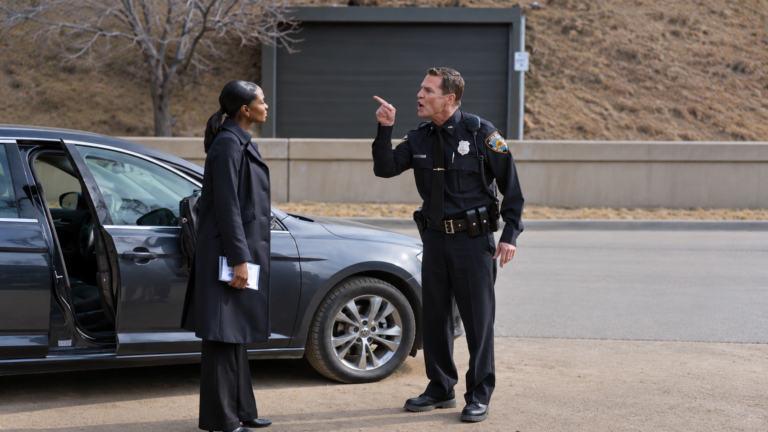
The next morning, his lawyer told him that reporting the visit had been the right decision.
“Nobody has to threaten you in explicit words for a contact to deserve documentation,” she said.
“Will they arrest him?”
“I don’t know.”
“I can’t even tell if he intended to frighten me.”
“You don’t have to decide that.”
Hayes sat with the telephone against his ear.
“I used to think the worst part of telling the truth would be telling it once.”
“And now?”
“Now everyone wants to know whether I mean to keep telling it.”
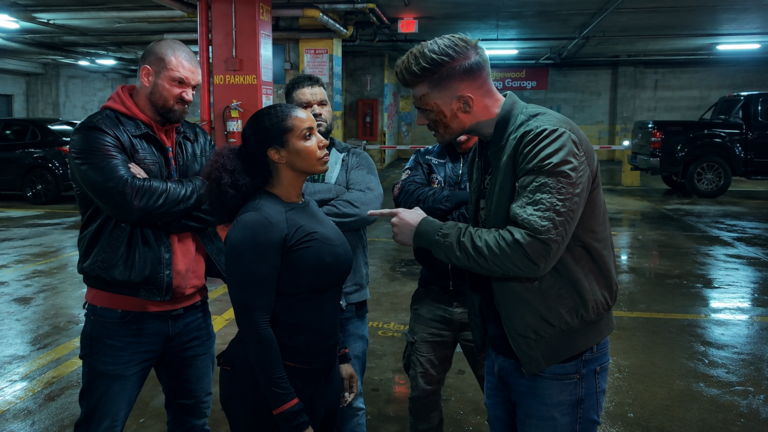
Pierce’s visit did not remain an isolated issue for long.
Two other employees reported being approached by former colleagues who urged them to withdraw cooperation or soften their recollections.
Investigators recorded each complaint separately and examined whether any contact violated the court’s safeguards.
Young received a concise briefing without the names of witnesses who did not need to be identified to her.
She asked what protective options were available.
The answer included designated reporting channels and clear instructions that no individual should confront a suspected intimidator alone.
She approved additional outreach to employees and residents who had already agreed to cooperate.
She did not announce an emergency or send armed officers to every door.
The work required careful decisions rather than gestures intended for cameras.
CHAPTER TWENTY-SIX: THE MEETING AT SIX
The transportation committee meeting began in a high school auditorium because the municipal conference room could not hold the crowd.
Parents stood along the walls with children in winter jackets.
Workers in uniforms occupied the back rows because their shifts ended too late for them to find seats.
Marisol sat beside Ruth and her brother Thomas.
Nia Palmer had offered to help speakers organize their comments, but she refused to turn the meeting into a substitute trial of Richard Sterling.
“Stick to what the route means and what the report actually shows,” she told them.
“Nobody here has to prove the whole federal case tonight.”
At six fifteen, committee chair Leon Mercer tapped the microphone.
“We are here to consider temporary adjustments to the eastern corridor service.”
A man near the aisle shouted that temporary changes often became permanent.
Mercer asked the audience to let speakers finish.
Then he invited Meridian’s consultant, Paul Vick, to explain the proposal.
Vick displayed a slide covered in red dots.
“Our analysis identifies persistent vehicular obstruction at these locations,” he said.
“Bus diversions would reduce conflicts until safer access points can be established.”
Ruth raised her hand.
“How many of those dots were actual blocked intersections?”
“We used official police data,
” Vick replied.
“That isn’t what I asked.”
Mercer reminded Ruth to wait for public comment.
Vick advanced the slide.
A red dot appeared on the street where Marisol’s van had been parked.
Marisol stood so quickly her chair struck the floor.
“That is my car.”
Vick looked startled.
“Ma’am, please wait.”
“You put my car on a map and called it a danger to buses.”
Nia touched her elbow.
“You’ll get the microphone.”
Marisol sat down and stared at the red dot until it disappeared.
When her turn came, she walked to the microphone with her receipts in a clear plastic folder.
“I am not here to relitigate my towing case,” she said.
“I’m here because you counted the removal of my van as proof that buses could not travel down a street where my van was not blocking a bus.”
She explained the location and the time.
She showed the committee that the tow had occurred from a parking area that was not part of the bus route.
A committee member asked whether she had a traffic engineer’s assessment.
“No,” Marisol said.
“I have the address where I parked, and your consultant has placed that address somewhere else.”
A murmur moved through the room.
Vick began typing into his laptop.
Mercer asked whether his team could verify the original location.
“We would need access to source records,” Vick said.
“Did you examine those records before giving us the map?”
Vick hesitated.
“We relied on the designated fields supplied to us.”
Thomas Delaney took the microphone next.
He described the route, the stop spacing, the places buses could safely turn, and the number of riders who would lose a reasonable walking connection.
“I drive this corridor every weekday,” he said.
“You can disagree with my observations, but you cannot substitute a towing bill for a traffic study.
”
A council member asked whether he had ever reported blocked bus stops.
“Yes,” Thomas said.
“Three times this year, and I can tell you exactly where they were.”
He named the locations.
None appeared among the highest-risk dots on Vick’s map.
Ruth finished the public comments with her clipboard.
She did not give an impassioned speech.
She read the number of riders who had described losing medical appointments, wages, or access to essential errands.
Then she placed the clipboard on the table for the committee secretary.
“These people have names,” she said.
“They live at the places your proposal treats as dots.”
By the end of the meeting, the committee had voted to postpone the route suspension until an independent traffic assessment could separate documented obstructions from disputed police removals.
The vote was not unanimous.
Two members argued that the change might still be necessary after better evidence was gathered.
Marisol did not object to that possibility.
She objected to having the answer chosen first and the facts supplied later.
As the crowd dispersed, she saw Vick standing alone near the stage.
“Did you know the numbers were wrong?” she asked.
He looked exhausted.
“I knew they came from police records.”
“That’s not an answer.”
“I didn’t check every incident.”
“Then you should have told the committee that before they tried to take away our buses.”
Vick looked toward the empty seats and said nothing.
CHAPTER TWENTY-SEVEN: THE CONTRACTOR’S CHOICE
Paul Vick sat in his parked car outside the school for twenty minutes before calling his business partner.
He had accepted the Crestwood assignment because Meridian needed the contract to survive another quarter.
His company had been hired to recommend service changes, not investigate police misconduct.
He had repeatedly told himself that the difference excused his decision to accept the figures without checking them.
Now he could hear Marisol’s voice whenever he closed his eyes.
“Did you know the numbers were wrong?”
His partner answered on the fourth ring.
“How did the meeting go?”
“They postponed the changes.
”
“That’s a problem.”
“The report is a bigger problem.”
Vick explained the mismatched locations and the absence of underlying traffic observations.
His partner interrupted.
“The city approved the data.”
“The city approved a dataset.”
“That’s the same thing for the contract.”
“Not for the people who nearly lost their bus stops.”
A silence followed.
“If you retract our conclusions,” his partner said, “we may have to refund the fee.”
“Then we should find out what we actually delivered.”
“You’re volunteering to destroy the company.”
“I’m trying to stop us from defending something we cannot support.”
His partner ended the call without agreeing.
Vick stared at the dark school windows.
He had come to Crestwood expecting to discuss service efficiency.
He was leaving with the uncomfortable knowledge that an elegant presentation could hide a very ordinary failure of judgment.
The following morning, Meridian issued a written correction to the transportation office.
It identified which conclusions required further verification and asked the city not to rely on the disputed obstruction totals pending a proper review.
The correction did not absolve the company of responsibility.
Vick’s partner accused him of acting without authorization, and the disagreement became a matter for their own lawyers.
But the committee secretary distributed the correction before anyone could quietly restore the old proposal to the agenda.
Ellen Moss learned about the correction from an internal city bulletin.
She brought her earlier procurement note to the appointed independent reviewer and explained how Meridian’s study had been commissioned.
The reviewer asked who had proposed the work.
“The request came through the city manager’s office,” Ellen answered.
“Do you know who drafted it?”
“No.”
“Did anyone tell you why pedestrian funds were being used?”
“I was told it was a preliminary access assessment.”
“Did you raise a question?”
Ellen looked directly at the reviewer.
“I asked for a clearer description, and I accepted an answer that wasn’t clear enough.”
The reviewer wrote down her statement.
“We may need you to answer more questions later.”
“I understand.”
She left without expecting praise.
For once, she felt that an incomplete answer had been treated as incomplete rather than polished into certainty.
CHAPTER TWENTY-EIGHT: A CHIEF WITHOUT A ROOM
Richard Sterling watched the transit meeting on a local news replay from the small apartment he was renting outside Crestwood.
His attorney had advised him not to speak publicly about the pending proceedings.
The advice had not stopped him from watching every report or trying to determine who was talking to investigators.
When the camera showed Bradley Hayes sitting in the audience, Sterling leaned forward.
“That boy doesn’t know when to quit,” he muttered.
His sister, Lorraine, was visiting to help him organize a collection of household boxes.
She heard him and turned off the television.
“You need to stop calling him a boy.”
Sterling stared at her.
“He was my officer.”
“He is a man who saw something you did.”
“You don’t know what policing is like.”
“I know what it is like to be frightened by someone who expects you to obey.”
Sterling reached for the remote.
Lorraine kept it in her hand.
“You called me because you wanted help finding a place to stay,” she said.
“I came because you’re my brother.”
“Then act like it.”
“I am.”
Her voice remained level.
“I won’t help you pretend every person who questions you is part of a plot.”
Sterling looked away.
He had spent fifteen years occupying the largest office in a building where other people waited outside his door.
Now his attorney scheduled his conversations, his badge was secured elsewhere, and people he once summoned would not return his calls.
The change enraged him more than he wanted to admit.
“They’ll have to prove it,” he said.
“Yes,” Lorraine replied.
“And you will have to answer the questions.”