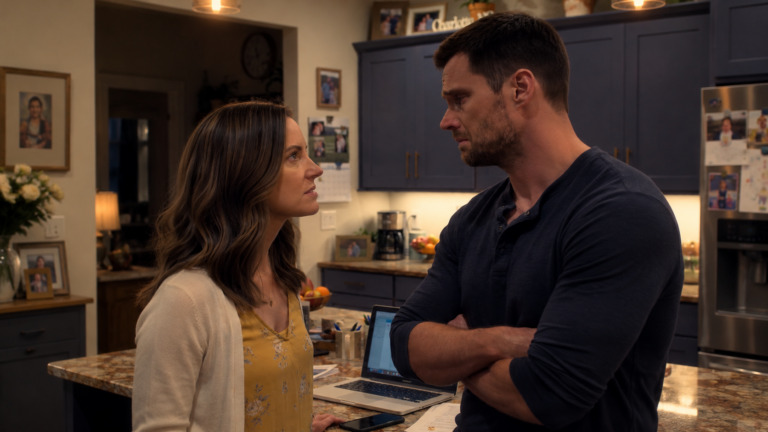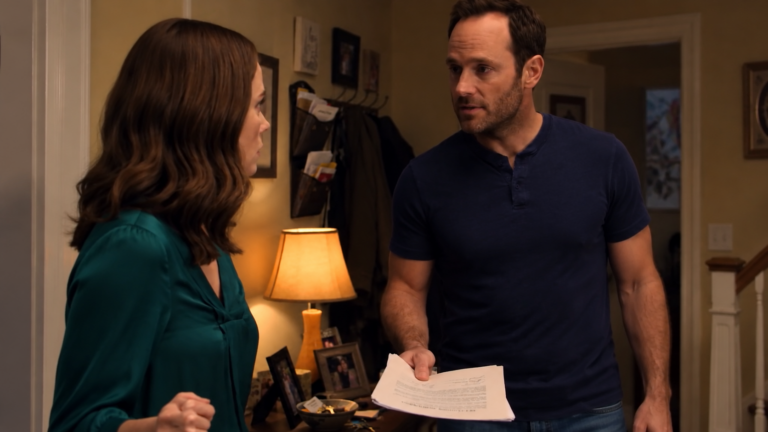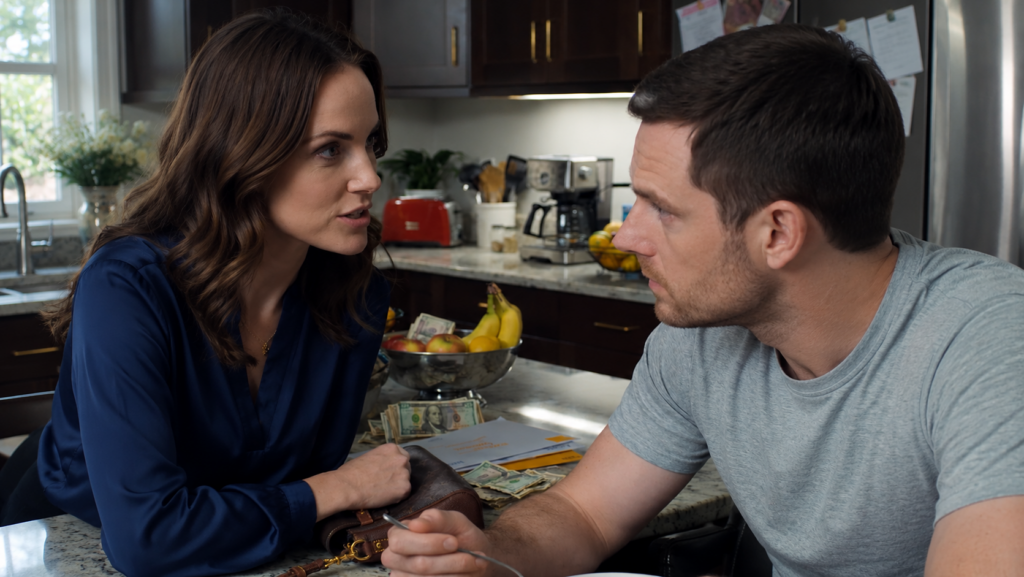
Belinda came home at 11:07 p.m. and dropped her purse onto the kitchen counter as though the clock had not been moving all day.
Her husband, Jonah Mercer, was eating cold fried rice from a chipped blue bowl.
He had texted her six times since breakfast.
None of the messages had been accusations.
The first had asked whether she wanted coffee before he left for work.
The last had asked whether he should save dinner.
Belinda glanced at the bowl and smiled with an expression Jonah had not seen before.
It was a smile made for an audience rather than a person.
“I had a one-night stand with my boss, and I’d do it again,” she said.
Jonah lifted another forkful of rice.
“Congratulations.”
Her smile faltered.
“That’s it?”
“I’m listening.”
“Aren’t you going to ask me why?”
“I imagine you have a speech prepared.”
She pulled out a chair so violently that its legs scraped the tile.
“I’m telling you our marriage is over, Jonah.”
“Then you should probably stop asking me to perform grief on command.”
Belinda stared at him.
For eight years, he had been the quieter person whenever they disagreed.
He did not raise his voice because he disliked what anger did to his hearing.
His father had shouted through every argument in Jonah’s childhood, and Jonah had learned to listen for the silence afterward.
Belinda had once called his quietness a gift.
Lately she called it weakness.
“I deserve to be happy,” she said.
“You do.”
“And I deserve someone who sees what I’m capable of.”
“You do.”
“Would you stop agreeing with me?”
Jonah put down his fork.
“Fight for what, Belinda?”
He studied the damp hem of her coat and the diamond-shaped mark left on her wrist by an expensive watch she never used to wear.
“You’re moving in with your boss,
and you’re pregnant with his child.”
The color disappeared from her face.
“How did you know?”
Jonah had not known.
He had seen prenatal vitamins hidden beneath her makeup three evenings earlier.
He had noticed that she now poured wine into the sink after pretending to drink it.
He had watched a clinic appointment notification appear on the family tablet before she snatched it away.
He had also noticed the overnight bag missing from the bedroom closet.
These details suggested a pregnancy and a plan.
They did not identify the father.
He wished he had not put his guess into a sentence sharp enough to cut both of them.
“Are you pregnant?” he asked.
Belinda pressed her palm against the counter.
“That’s none of your business.”
“If we are still married, whether I might be the father is my business.”
“Don’t make this ugly.”
“You walked in and announced that you slept with another man.”
“You don’t understand what’s happening.”
“Then explain it.”
She looked toward the hallway as if someone might be waiting there with instructions.
“He says he can help me make a clean start.”
“Your boss?”
“Dorian.”
Jonah knew the name.
Dorian Kells owned Nestwell Living, a growing company that promised employers beautiful on-site family rooms where new parents could rest,
feed babies, and arrange short-term childcare appointments.
Belinda had joined Nestwell two years earlier as an operations manager.
She had been proud of the company’s first two locations.
Jonah had attended their opening ceremonies, hung temporary banners, and watched Belinda demonstrate the locking cabinets, washable furniture, and soft overhead lighting.
He had also watched her spend more and more evenings beside Dorian at private dinners presented as client meetings.
“Does Dorian know you might be carrying my child?” Jonah asked.
Belinda flinched.
“He knows what he needs to know.”
“That isn’t an answer.”
“I didn’t come here to discuss biology.”
“You came here to announce the affair and make sure I felt it.”
She opened her purse and searched for her keys although they were lying beside it.
“I’ll be staying elsewhere tonight.”
“Take what you need.”
She looked offended by the lack of resistance.
“We’ll work out the house later.”
“Yes.”
“And I need you not to call my office.”
“I wasn’t planning to.”
Her phone vibrated.
She turned its screen toward her chest.
Jonah stood and carried his bowl to the sink.
“I’m not making any decisions about property tonight,” he said.
Belinda backed toward the door.
“You’ve already decided something.”
“I’ve decided not to let you decide everything for me.”
She left without saying goodbye.
The front door closed softly, which somehow hurt worse than a slam.
Jonah stayed beside the sink until he could hear the garage door opening.
Only then did he allow himself to bend forward and grip the edge of the counter.
He breathed through the first wave of nausea.
He wanted to throw the bowl across the kitchen.
He wanted to call Belinda back and ask when his life had become a story told without him.
Instead he washed the fork and placed it in the drying rack.
He opened his laptop at the same table where they had once planned their wedding.
He named a spreadsheet OPERATION BYE-BYE BELINDA.
The ridiculous title kept his hands steady enough to type.
He listed the mortgage payment, the two car loans, the joint checking account, the household insurance, the property tax schedule, and the questions he would take to a divorce attorney.
He did not transfer money or change passwords.
He copied the bills he had lawful access to and wrote down their payment dates.
He added a note beside the pregnancy question.
Do not assume paternity either way.
He saved the sheet and shut the computer at 2:13 a.
m.
At 6:40, two messages arrived.
The first came from Belinda.
We need to talk tonight.
The second came from a number he did not recognize.
Please don’t do anything until we talk.
Jonah stared at the second message.
A moment later a third appeared.
This is concerning the employee daycare contracts, not your marriage.
Someone at Nestwell already knew that his private life was about to collide with something else.
CHAPTER TWO — THE EMPTY NURSERY
Jonah worked for a local shop that restored antique mechanical signs and repaired the moving displays used in old theaters.
His work was patient,
physical, and usually silent.
He had a hundred brass letters to polish that morning, but he kept looking at his phone.
At nine, he called the unknown number from outside the workshop.
A woman answered after one ring.
“My name is Priya Sethi,” she said.
“Are you with Nestwell?”
“I was their regional installation coordinator until yesterday.”
“Why are you texting me?”
“Because someone told me your wife had access to the family-room acceptance reports.”
“I don’t discuss my wife’s work.”
“Neither do I, normally.”
Priya lowered her voice.
“I’m trying to reach her, and every corporate number I have goes straight to Dorian’s assistant.”
“Then email her.”
“She has stopped opening my messages.”
Jonah looked at the rain sliding down the shop window.
“What do you want me to do?”
“I want you to tell her not to sign anything presented as an end-of-project acknowledgment.”
“Why?”
“Because three rooms on the company’s completion list are empty spaces.”
Jonah rubbed his forehead.
“Are you saying they weren’t built?”
“I’m saying the companies paying for them have been told they’re ready for use.”
A delivery van passed, drowning out Priya’s next words.
When the noise cleared, she sounded close to tears.
“People are planning their return to work around those rooms.”
Jonah glanced at the wall clock.
“Have you contacted the companies directly?”
“I have an appointment with one of them this afternoon.”
“Then you should use that appointment.”
“Jonah, Dorian is going to say Belinda approved the sites.”
He straightened.
“Did she?”
“I don’t know.”
“Then I can’t help you invent an answer.”
“I don’t need you to.”
Priya inhaled audibly.
“I need one person close to her to tell her that silence won’t make this go away.”
The call ended before Jonah could reply.
He stood outside the shop for another minute, listening to the little bell over the door ring as customers entered.
A marriage was not a business partnership.
He had no right to act as Belinda’s agent.
Yet a stranger had just described something that sounded like a danger to ordinary people rather than a dispute between executives.
Jonah sent Belinda a short text.
Priya Sethi called me about Nestwell site reports.
I told her I won’t speak for you.
If the reports are wrong, please talk to the affected employers yourself.
Belinda called immediately.
“Who gave her your number?”
“I didn’t ask.”
“She’s trying to destroy my career.”
“She said three rooms aren’t finished.”
“They’re in a commissioning phase.”
“She says they’re marked complete.”
“Dorian has everything under control.”
“That phrase didn’t answer what I said.”
“Stay out of my company.”
“I intend to.”
“Then stop repeating her allegations.”
“I sent you one message.”
“You don’t know what she’s capable of.”
“Neither do I.”
Belinda went quiet.
When she spoke again, her voice was thinner.
“Don’t meet her.”
“I haven’t arranged to.”
“Promise me.”
“I’m not giving you a promise you haven’t explained.”
She disconnected.
At lunchtime, Jonah returned home to find a delivery box beside the front door.
It contained a small wooden cradle mobile he had ordered the previous month for his sister’s baby shower.
A delicate brass star hung at its center.
He carried the box into the spare bedroom, which had become a storage space over the last few years.
Belinda had once wanted children urgently.
Then she had wanted to wait until she became a director.
Then she had wanted them only when they could afford a larger home.
Jonah had said he could wait, but waiting had quietly changed from a temporary arrangement into a life.
He placed the unopened box on the floor and remembered the hidden vitamins.
His anger became mixed with grief so quickly that he could not separate them.
He had not known they might be expecting a child until he was already losing his wife.