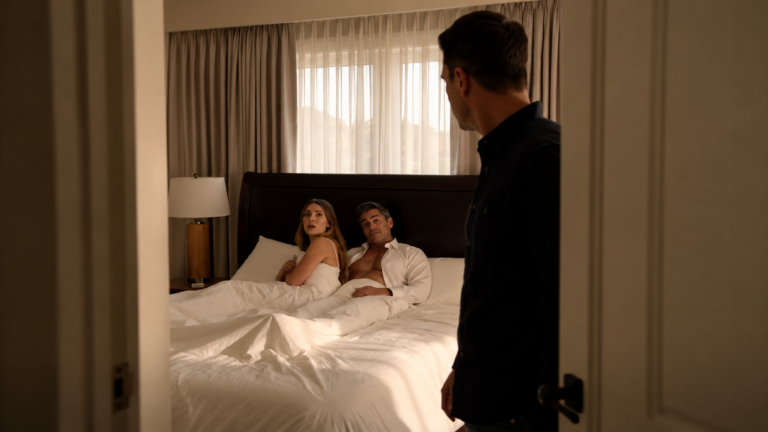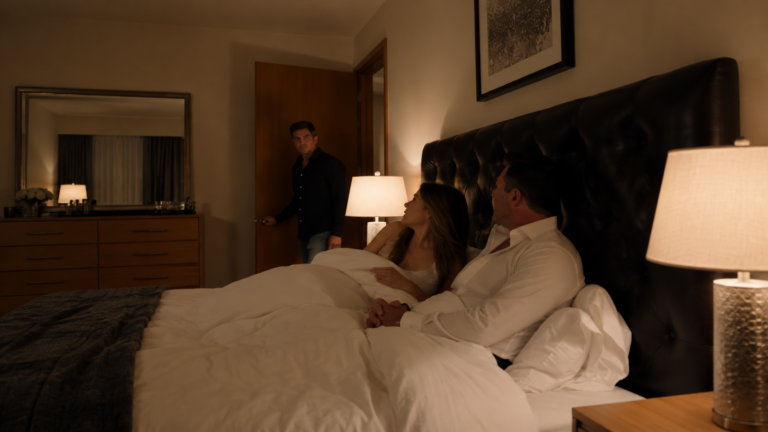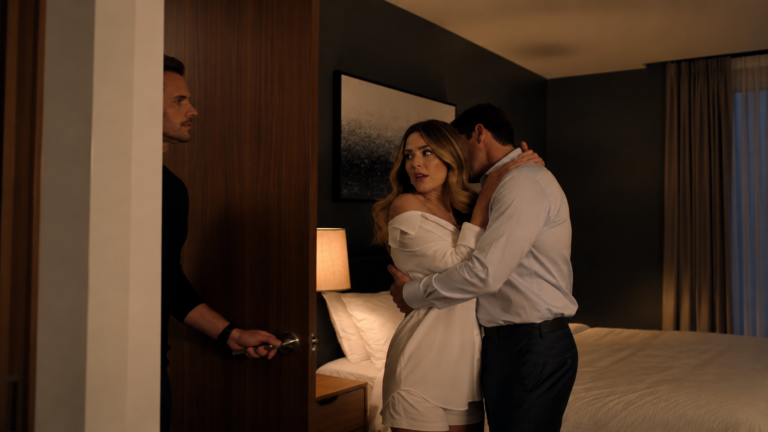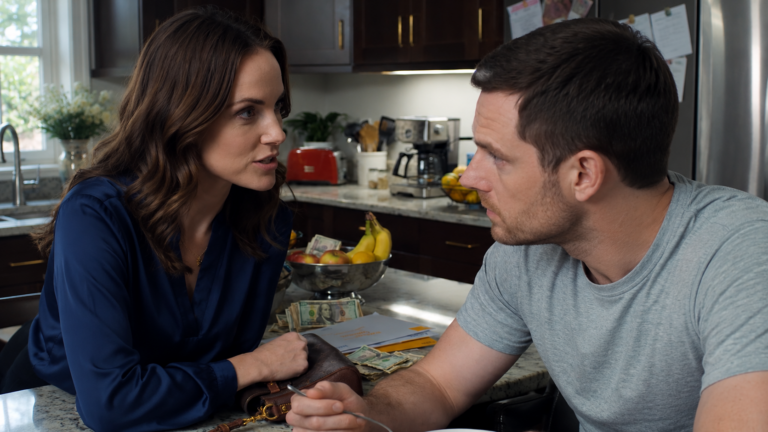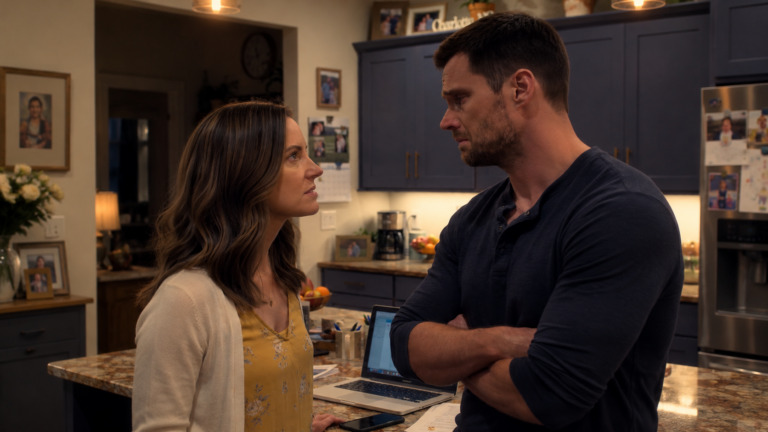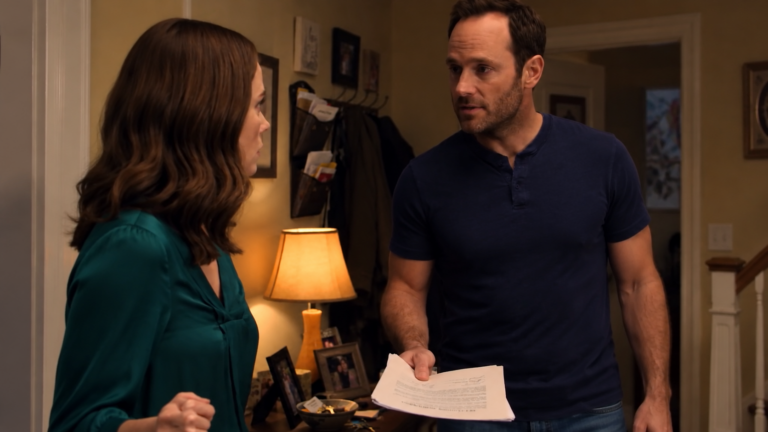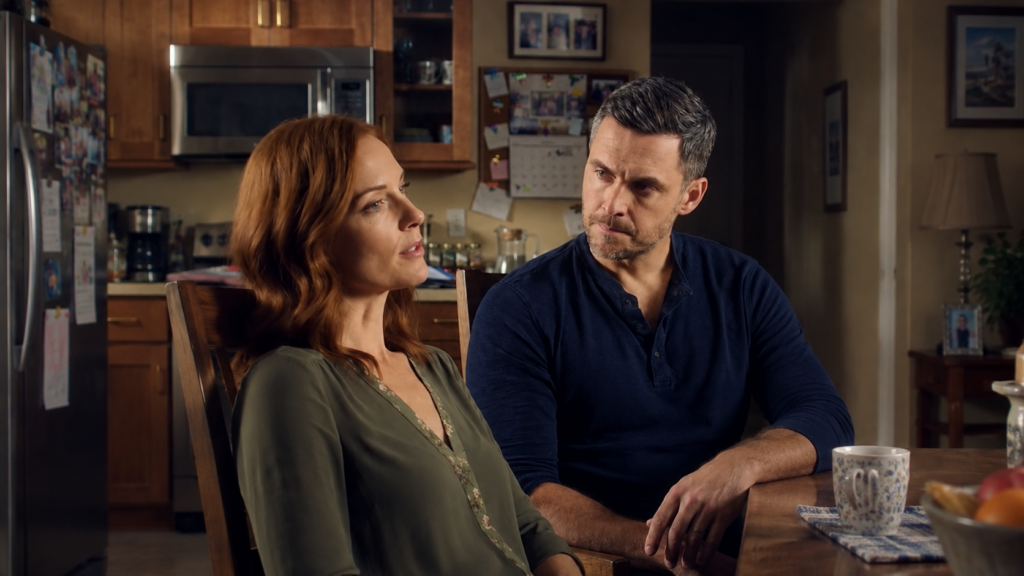
Laura smiled at the kitchen table as though she were announcing a change in our dinner reservations.
“I’m seeing someone else, Michael.”
I kept my hands beside my untouched coffee.
“How long?”
“Long enough to know I’m happier with him.”
The refrigerator hummed behind her, making a noise I had meant to have repaired for months.
I had expected the truth eventually, but I had pictured it arriving in a whisper instead of a smile.
“Does he know you’re married?”
“Of course he does.”
“And does he know you’re planning to tell me?”
Laura looked impatient.
“I don’t want to turn this into an interrogation.
”
I reached beside my chair and set a beige folder on the table.
“Open it before you make any more plans.”
She gave a short laugh, and for one absurd second she looked like the woman who had once laughed at my hopeless attempts to make pancakes.
“What’s that supposed to be?”
“Someone delivered it this morning.”
Her smile disappeared when she saw the first page.
There were copies of emails, hotel receipts, and a schedule from our consulting firm, Westbridge Advisory.
The invoices were not intended to prove the affair, since she had already admitted it.
They established dates and places when our firm’s client meetings had taken place without the people supposedly attending them.
The last page listed a Monday meeting with outside counsel, senior management, and an internal investigation number.
Under the number appeared the name of Laura’s new boyfriend, Adrian Vale.
Her chair scraped the floor.
“What did you do?”
“Nothing. That’s the part you should be worried about.”
She studied the meeting notice as if the ink might rearrange itself.
“Where did you get this?”
“It arrived sealed, with my name written on the envelope.”
“Who sent it?”
“I don’t know.”
“You’re lying.”
“I wish I had a better answer.”
The kitchen clock showed seven forty-two.
I had a nine o’clock call with the team preparing Westbridge’s presentation for the Briar County Library Network.
We were supposed to show the county why closing four mobile library routes would improve access to books.
I had spent five months developing the financial projections, and I had spent the previous two nights trying to understand why the survey results seemed so different from what our field staff were reporting.
Laura worked in client experience, where she wrote the narratives that translated our numbers into human stories.
She had supplied eight glowing testimonials from residents who supposedly preferred digital appointments to the bookmobiles that visited their rural communities.
Her new boyfriend was an independent reviewer assigned to the county contract.
Until the folder arrived, I had not known he had also been booked into a Westbridge hotel expense account on the same dates as those interviews.
“What exactly did Adrian tell you?” I asked.
“This has nothing to do with you.”
“My name is on the final recommendation.”
“Your name is on a lot of things.”
“That isn’t an answer.”
Laura closed the folder slowly.
“He said the investigation was routine.”
“Did he tell you an investigation had started?”
“Michael, please.”
“Did he?”
“Yes.”
“Before you told me about him?”
She nodded.
A car passed outside, spraying rainwater across the road.
Our house had always seemed quiet in the morning, but the silence now sounded deliberate.
“Did you write those testimonials?” I asked.
“I prepared the presentation materials.”
“That’s not what I asked.”
“We had a deadline.”
“Did you interview the people whose names appear on those pages?”
Her eyes moved to the folder.
“Adrian said he was checking the records.”
“Laura.”
“Some of the interviews were reconstructed from field notes.”
“Which field notes?”
“The field team had incomplete responses.”
“Our team told me their forms had been complete.”
She stood and carried her coffee to the sink, although she had not tasted it.
“This is why I can’t have conversations with you anymore.”
“Because I keep asking whether a real person said something?”
“Because you make every question sound like a trial.”
I could have argued about the fourteen years we had spent together.
I could have asked whether Adrian had been worth the secrecy and the small humiliations of coming home to a spouse whose attention had moved elsewhere.
Instead, I looked at the Monday meeting notice again.
“I’m going to tell my director the data cannot be certified.”
Laura turned so quickly that she struck the counter with her elbow.
“You cannot do that.
”
“Why?”
“Because this is not your fight.”
“My signature is scheduled for the final report.”
“You’ll destroy months of work.”
“If the report is false, that work has already been destroyed.”
For the first time that morning she looked frightened rather than defensive.
“Adrian told me he could fix it.”
I picked up my coat.
“Then he had better explain what he means by fixing it.”
Chapter Two: An Empty Seat
Westbridge Advisory occupied the upper floors of a brick building that had once housed a textile warehouse.
The reception area displayed photographs of smiling consultants beside slogans about listening to communities.
I had helped choose one of those slogans.
That morning it embarrassed me.
My director, Naomi Bell, was already in the conference room when I arrived.
She held a tablet in one hand and looked as if she had been awake all night.
“Close the door, Michael.”
“I was about to ask you for five minutes.”
“You can have twenty.”
I placed the beige folder before her, but she pushed it back.
“Keep your copy.”
“You know what’s in it?”
“Counsel told me an outside reviewer received the same records yesterday.”
“Why wasn’t I informed?”
“We didn’t know who was affected.
”
“My name is on the report.”
“That’s one reason you’re here.”
Naomi sat down and asked whether I had changed any survey responses.
I told her I had handled forecasting and scheduling, not interviews.
She asked whether I knew that two of our field workers had disputed the completed interview log.
I admitted I had noticed their objections in the project channel but assumed the client experience team was resolving them.
“Assuming is not a defense I enjoy hearing from you,” she said.
“I know.”
She opened a dashboard on her tablet.
It showed the percentage of county residents classified as willing to replace mobile library visits with remote consultations.
The figure stood at eighty-one percent.
“The raw attendance logs suggest the opposite,” she said.
“The bookmobiles have waiting lists.”
“Yes.”
“Why did we recommend shutting routes that people are using?”
“Because the county told us its budget was shrinking, and the model found the cheapest answer that fit the assumptions.”
“Who supplied the assumptions?”
“Laura’s team.”
I looked away.
Naomi did not soften her voice.
“Your marriage is not part of the review unless somebody made it part of the work.”
“I understand.”
“Do you?”
“I am trying.”
She told me the county intended to vote on the service redesign the following Thursday.
If it passed, two mobile units would be sold before winter and two more would be parked at central branches.
The county’s oldest bookmobile, a faded yellow vehicle called Marigold, served communities separated from the nearest permanent library by forty miles of difficult roads.
The savings calculation treated that distance as a minor inconvenience.
I had built the formula that turned inconvenience into dollars.
“We need to stop the submission,” I said.
“The submission is already with the county.”
“Then we need to correct it.”
“Counsel wants the facts established first.”
“The vote won’t wait for our lawyers.”
Naomi turned her tablet facedown.
“You can review the raw operational records with an independent analyst.”
“Who?”
“Nadia Flores from our Chicago office.”
“Will Laura be involved?”
“Not in the data review.”
“And Adrian?”
“The county hired him to audit public engagement.”
“The folder shows his travel expenses charged to us.”
“That’s among the questions on Monday’s agenda.”
I left the conference room feeling neither protected nor accused.
The office continued moving around me as though the firm had no idea what waited behind its polished doors.
At eleven, Nadia called and introduced herself without pretending we were friends.
“I don’t want your conclusions,” she told me.
“I want to know which numbers you personally saw.”
She had a sharp voice and an appetite for precision that I would have admired under different circumstances.
I sent her the original forecasts, the revised assumptions, and the notes from three county workshops.
Within forty minutes, she called back.
“There is a problem in the attendance denominator.”
“How serious?”
“Your model divides responses by households, but the input file counts library cards as households.”
“That would reduce repeat-user influence.”
“It does more than that.”
“Explain.”
“People who attend twice a month are treated as duplicate observations and dropped, while anonymous web visitors count individually.”
I stared at the spreadsheet on my monitor.
The formula was mine, but the definition of a household had changed after the model went into review.
“Who changed the source map?”
“That’s what I intend to find out.”
I printed the model’s revision history and discovered that the access key belonged to a temporary account created for the public-engagement vendor.
Adrian Vale was listed as the vendor’s primary contact.
I felt an impulse to call Laura immediately.
Instead, I asked Nadia to preserve the logs before anyone could revise them again.
“Already done,” she said.
“You’re not the first person this week to be frightened of disappearing numbers.”