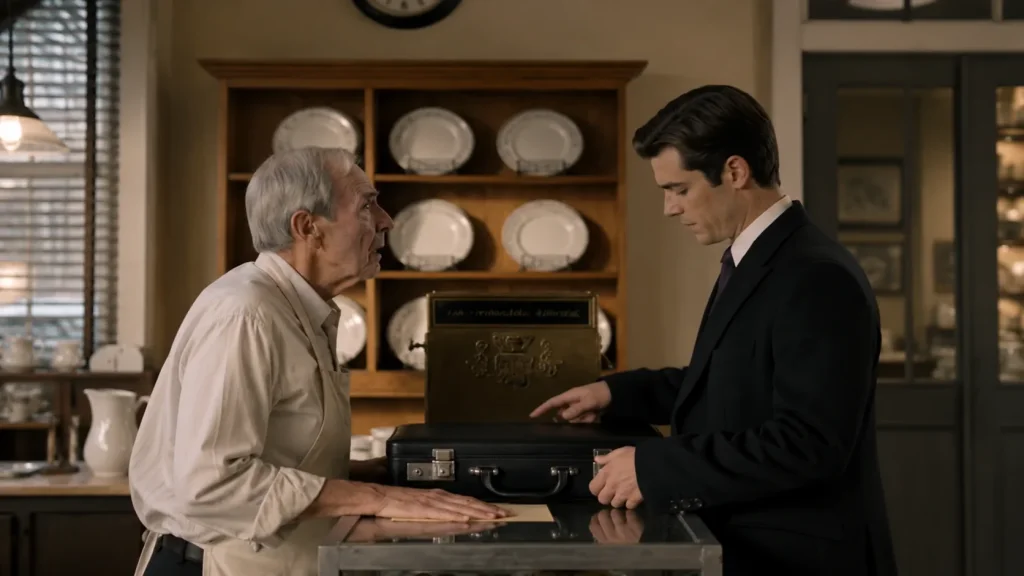
The first thing Harold Mercer noticed about the stranger was not the expensive coat or the polished shoes.
It was the way the man stood between the counter and the front door, as though he expected somebody to come through it.
The second thing Harold noticed was the yellow paper lying beside the cash register.
Twenty two years had turned its edges brown and softened the little blue heart until it looked like a shadow beneath the surface.
Harold knew that heart because he had watched a hungry child draw it with a broken crayon.
He remembered the boy’s trembling fingers and the serious promise he had made while clutching two warm loaves against his chest.
Harold had spent years wondering whether the child had found a safe place to sleep that night.
Now the child was standing before him as a grown man, and the bakery was about to disappear.
The stranger opened a leather case and laid a document on the counter.
Harold read the first page without understanding why the buyer’s name appeared beside the name of the boy he remembered.
His hands began to shake harder.
June, he whispered, why is your name on this?
The man looked toward the locked door before answering.
Because I did not find out what they were doing until this morning.
A delivery truck passed outside, throwing a rectangle of light across the empty pastry case.
Harold waited for the rest of the explanation, but June pressed one finger against the document and asked a question instead.
Did anyone from the bank tell you who was actually purchasing the building?
Harold shook his head.
They said an investment company had acquired the note, and they said the sale was final.
June studied his face.
Did they show you the original loan agreement?
Harold gave a tired laugh.
Son, I have been asking to see that agreement for six months.
June closed the case with a quiet click.
Then somebody has been counting on you never seeing it.
For the first time that afternoon, Harold forgot about the sign taped to the door.
He looked at the man he had once fed and realized that his return was not a simple visit of gratitude.
Something much larger had followed him into the bakery.
The little shop stood on the corner of Maple and Third in the fictional Pennsylvania town of Bellweather, where the railroad tracks divided old brick storefronts from newer streets lined with shopping centers.











